

As a seasoned supplier of tungsten carbide plates, I've witnessed firsthand the pivotal role these components play across various industries. Tungsten carbide plates are renowned for their exceptional hardness, wear resistance, and strength, making them indispensable in applications ranging from cutting tools to mining equipment. However, achieving optimal performance from tungsten carbide plates isn't always straightforward. Numerous factors can influence their performance, and understanding these elements is crucial for both manufacturers and end-users. In this blog post, I'll delve into the key factors that affect the performance of tungsten carbide plates, offering insights based on my years of experience in the industry.

Chemical Composition
The chemical composition of tungsten carbide plates is perhaps the most fundamental factor influencing their performance. Tungsten carbide (WC) is a compound composed of tungsten and carbon, typically combined with a metallic binder such as cobalt (Co). The ratio of tungsten carbide to the binder phase significantly impacts the plate's properties.
- Tungsten Carbide Content: Higher tungsten carbide content generally results in increased hardness and wear resistance. Plates with a higher WC content are better suited for applications requiring extreme abrasion resistance, such as in mining and metalworking. However, they may also be more brittle and prone to cracking under high-stress conditions.
- Binder Phase: The binder phase, usually cobalt, acts as a matrix that holds the tungsten carbide particles together. The amount of binder affects the plate's toughness and ductility. A higher cobalt content enhances the plate's shock resistance and reduces the risk of cracking, making it suitable for applications involving high-impact loads. Conversely, a lower cobalt content increases hardness and wear resistance but sacrifices some toughness.
Grain Size
The grain size of tungsten carbide particles is another critical factor that influences the performance of tungsten carbide plates. There are three main categories of grain sizes: fine, medium, and coarse.
- Fine Grain: Fine-grained tungsten carbide plates offer superior hardness, wear resistance, and surface finish. They are ideal for applications requiring high precision and fine cutting edges, such as in micro-machining and high-speed cutting. However, fine-grained plates may be more expensive to produce and are generally less resistant to impact than coarser-grained alternatives.
- Medium Grain: Medium-grained tungsten carbide plates strike a balance between hardness, wear resistance, and toughness. They are suitable for a wide range of applications, including general machining, turning, and milling.
- Coarse Grain: Coarse-grained tungsten carbide plates are known for their high toughness and impact resistance. They are commonly used in applications involving heavy cutting, rough machining, and high-impact loads, such as in mining and construction.
Manufacturing Process
The manufacturing process of tungsten carbide plates can have a significant impact on their performance. The following steps are involved in the production of tungsten carbide plates:
- Powder Preparation: High-quality tungsten carbide powder is essential for producing high-performance plates. The powder is typically prepared by mixing tungsten and carbon powders and then subjecting them to a high-temperature process called carburization.
- Mixing and Pressing: The tungsten carbide powder is mixed with the binder phase and other additives, then pressed into the desired shape using a hydraulic press. The pressing process determines the density and uniformity of the plate.
- Sintering: Sintering is a high-temperature process that fuses the tungsten carbide particles together, creating a dense and cohesive structure. The sintering temperature and time are carefully controlled to ensure optimal properties. Over-sintering can lead to grain growth and reduced hardness, while under-sintering can result in a porous and weak structure.
Heat Treatment
Heat treatment is a post-manufacturing process that can further enhance the performance of tungsten carbide plates. There are several types of heat treatments, including annealing, quenching, and tempering.
- Annealing: Annealing is a process of heating the plate to a specific temperature and then slowly cooling it. This treatment relieves internal stresses, improves the plate's ductility, and reduces the risk of cracking during subsequent processing or use.
- Quenching: Quenching involves rapidly cooling the plate from a high temperature to room temperature. This process increases the plate's hardness and wear resistance but may also introduce internal stresses and make the plate more brittle.
- Tempering: Tempering is a process of reheating the quenched plate to a lower temperature and then cooling it slowly. This treatment reduces the brittleness of the plate and improves its toughness and ductility.
Application Conditions
The performance of tungsten carbide plates is also influenced by the application conditions in which they are used. The following factors should be considered when selecting a tungsten carbide plate for a specific application:
- Cutting Speed and Feed Rate: The cutting speed and feed rate in machining operations affect the temperature and stress levels on the tungsten carbide plate. Higher cutting speeds and feed rates generate more heat and stress, which can lead to faster tool wear and reduced tool life. It's important to select a plate with the appropriate hardness and toughness for the specific cutting conditions.
- Cutting Material: The type of material being cut also plays a role in the performance of tungsten carbide plates. Different materials have different hardness, abrasiveness, and chemical properties, which can affect the wear rate and cutting performance of the plate. For example, cutting hard and abrasive materials such as stainless steel and titanium requires a plate with high wear resistance and toughness.
- Cooling and Lubrication: Proper cooling and lubrication are essential for maintaining the performance and longevity of tungsten carbide plates. Cooling fluids help to dissipate heat, reduce friction, and flush away chips and debris. They also prevent the formation of built-up edge, which can degrade the cutting edge and reduce tool life.
Surface Finish
The surface finish of tungsten carbide plates can significantly impact their performance, especially in applications where friction and wear are critical factors. A smooth surface finish reduces friction, improves chip evacuation, and enhances the plate's resistance to adhesion and built-up edge formation.
- Grinding and Polishing: Grinding and polishing are common methods used to achieve a smooth surface finish on tungsten carbide plates. These processes remove surface irregularities and improve the plate's dimensional accuracy and surface quality. However, they can also introduce residual stresses and affect the plate's hardness and wear resistance if not performed correctly.
- Coating: Coating the surface of tungsten carbide plates with a thin layer of hard materials, such as titanium nitride (TiN) or titanium carbonitride (TiCN), can further enhance their performance. Coatings provide additional wear resistance, reduce friction, and improve the plate's chemical stability. They are particularly beneficial in high-speed cutting and dry machining applications.
Conclusion
In conclusion, the performance of tungsten carbide plates is influenced by a multitude of factors, including chemical composition, grain size, manufacturing process, heat treatment, application conditions, and surface finish. As a supplier of tungsten carbide plates, I understand the importance of carefully considering these factors to ensure that our customers receive products that meet their specific requirements.
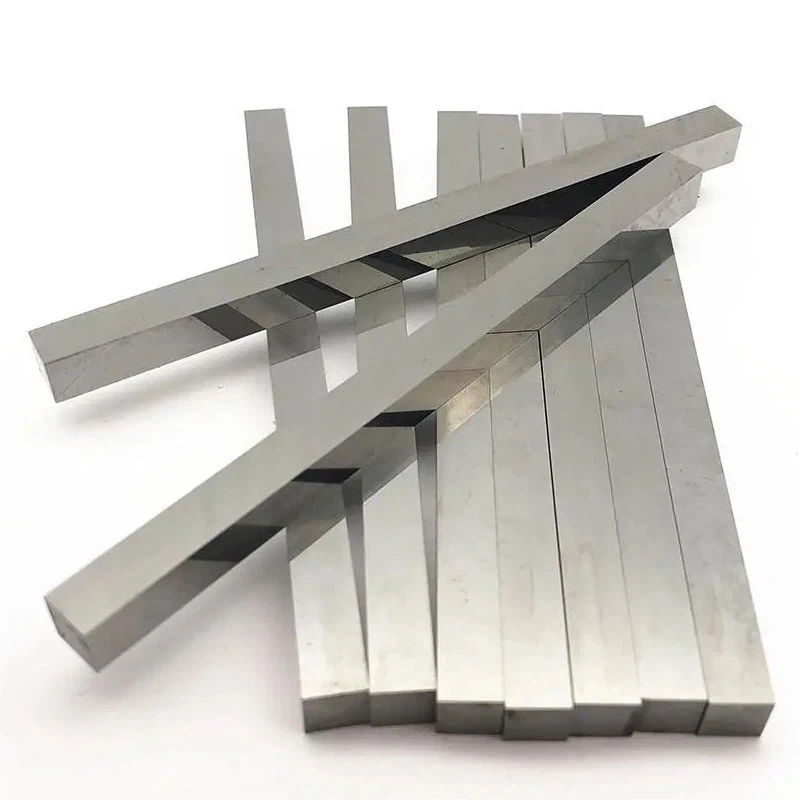
If you're in the market for high-quality tungsten carbide plates, we offer a wide range of products to suit various applications. Our Tungsten Carbide Strip Blanks are available in different grades and sizes, providing excellent wear resistance and dimensional accuracy. For sandmaking applications, our Tungsten Carbide Tips for Sandmaking are designed to withstand extreme abrasion and impact. And if you need tungsten carbide strips for cutting tools, our Tungsten Carbide Strip For Cutting Tools offer superior hardness and cutting performance.
We're committed to providing our customers with the best products and services. If you have any questions or would like to discuss your specific requirements, please don't hesitate to contact us. We look forward to the opportunity to work with you and help you find the perfect tungsten carbide solution for your needs.
References
- German, R. M. (2009). Tungsten Carbide: Properties, Processing, and Applications. William Andrew Publishing.
- Shaw, M. C. (2005). Metal Cutting Principles. Oxford University Press.
- Trifonov, V. I. (2010). Tungsten Carbide and Hardmetals. Elsevier.


