

Tungsten Carbide Dies
Why Choose Us
Strong R&D capabilities
The company has more than 20 patents in cemented carbide and deep processing technology, new materials, and new technologies, and has strong research and development capabilities.
Production Market
The whole China market, South Asia, south-eastern Asia, East Asia, North America,South America, Europe, etc countries and regions.
Professional team
We have a professional quality control team that follows the ISO9001:2015 system.
Provide OEM service
We work on OEM orders. Which means size, quantity, design, packing solution, etc will depend on your requests.
Tungsten carbide dies are a kind of tool used for cutting metals, and shaping metals. They can be made from different materials, including PCD, and so on. Considering the cost and working life, tungsten carbide is the most cost-effective material used for manufacturing dies. And tungsten carbide is extremely hard and durable. Tungsten carbide dies can be used to cut thick metal sheets, pipes, and other materials. Tungsten carbide dies can also use to create threads in metal surfaces.
-
 Tungsten Carbide Punching DiesPunching die is a special process equipment that processes materials (metal or non-metal) intoAdd to Inquiry
 -
 Cemented Carbide Punching DiesIn standard parts industry, tungsten carbide punching dies need to under great unit pressure inAdd to Inquiry
 -
 Cemented Carbide Drawing DiesWire drawing dies are commonly used to reduce the diameter of various ferrous and non-ferrous rodsAdd to Inquiry


Email: richard@sanshengalloy.com
- Add: No.39, Fuchuan Rd., National High-Tech Development Zone, Zigong, Sichuan, China
Benefits of Tungsten Carbide Dies
Long-Lasting Strength and Durability:Tungsten carbide is known for its superior strength. Whether you’re in the market for extrusion dies, stamping dies or shaving dies, the tungsten carbide construction helps our industrial dies last longer without damage or deterioration. Our tungsten carbide dies are also produced to meet industry standards, so you can rely on their efficiency and durability for years to come.
Save Money over Time:Though tungsten carbide wear parts tend to have higher upfront costs than steel parts, they also tend to last longer. By investing in tungsten carbide dies, you won’t have to spend the time and money to continuously replace your dies.
Increased Productivity on the Jobsite:Where replacement wear parts can cost more in the long run, and often require more maintenance and repairs, tungsten carbide dies help to reduce downtime and enhance productivity. Instead of continuously replacing wear parts when your machines could be running, opt for the durability and longevity of tungsten carbide dies.
Made in Michigan to Fit Your Specifications:We produce all of our industrial wear products right here in Saginaw County, Michigan, serving customers across the U.S. and Canada. Our technicians are dedicated to manufacturing not only quality, reliable tungsten carbide dies, but parts that live up to your high standards and specifications.
Application of Tungsten Carbide Dies
Have you ever wondered what is at the tip of large drills and earthmoving vehicles. Since simply using metallic body of the machinery may result in wear, tungsten carbides dies are used as attachments at the tip to allow for less wear on the machine itself. A tip is easier to replace while a down the hole drilling unit is not. So, tungsten carbides dies in the form of small button inserts or large attachments are used in the mining industry.
Similar to mining and drilling industry, the manufacturing industry also employs tungsten carbides dies to cut, drill, shape and produce. Drills bits used by a handyman, to some of the screwdrivers used by a normal-joe, tungsten tips can be found in all of those. Instead of a sharp-edged steel, a tungsten carbide will take a lot of wear to dull and also be inefficient, so, use in cutting tools is a no-brainer.
People living in areas that sees snow few months a year know the difficulty of driving on snow, much less the ice. When the temperature gets below 5 degrees everyone is changing out their tires for ones with spikes on the outside. The spikes in more and more cases are being made of tungsten carbides dies. Since you are going to destroy the tire with the spikes, a high wear resistance material is always preferable. But not just in vehicle tires, snowmobiles, skiing poles, hiking and trekking poles, sometimes even the horseshoes consist of tungsten carbide.
One of the industries that has stepped up the use of tungsten carbide is the aerospace industry. Planes and jets are flying at higher and higher altitudes, while this is done to decrease the air resistance and increase fuel efficiency, the temperature outside at 35,000 feet is more than negative 50-degree celsius. As we have discussed above, the temperature resistance of tungsten carbide is extremely high. So, flying on high or low altitude, the wear resistance come in handy when it comes to the expensive aerospace parts.
Types of Tungsten Carbide Dies
Wire Drawing Dies: Mastering the Art of Precision Wire Production
Wire drawing is a fundamental process in the creation of electrical wires, cables, and metal components. Tungsten carbide wire drawing dies play a pivotal role in this process. They are designed to reduce the diameter of metal wires by drawing them through the die. The extreme hardness and wear resistance of tungsten carbide ensure that these dies can withstand the immense pressure and heat generated during wire drawing, guaranteeing precise dimensions and smooth surfaces in the final products.
Cold Heading Dies: Shaping Fasteners with Resilience
Screws, bolts, and fasteners are integral components in various industries. Tungsten carbide cold heading dies are pivotal in their production. These dies are responsible for shaping and forming metal blanks at room temperature, allowing for the creation of high-quality, precise fasteners. Tungsten carbide's extraordinary hardness ensures that the dies remain durable even under high levels of stress.

Tube and Rod Drawing Dies: Crafting Flawless Cylindrical Shapes
Similar to wire drawing dies, tube and rod drawing dies are employed in the manufacturing industry to reduce the diameter of metal tubes and rods while maintaining precision. Tungsten carbide tube and rod drawing dies are instrumental in producing these crucial components, ensuring they meet exacting standards and specifications.
Extrusion Dies: Crafting Complex Profiles with Precision
The production of aluminum or plastic profiles with intricate cross-sections requires extrusion dies. Tungsten carbide extrusion dies, with their exceptional hardness, are tailor-made for this task. These dies can withstand the immense pressure and abrasion encountered during the extrusion process, ensuring the production of high-quality, precisely shaped components.
Properties of Tungsten Carbide Dies
High Toughness
During the extrusion process, the die must be able to endure complicated loads while also withstanding high extrusion pressure, bending stress, and impact. As a result, after heat treatment, the chosen material must have a high degree of toughness. So that the die may be hardened and organized uniformly, the die material should have strong hardenability. Large carbide, significant deflection, fiber orientation, non-metallic inclusions, and other internal flaws will lower the mold's toughness or induce stress concentration in the load, which will cause early mold destruction.
Wear Resistance
The die should have a high level of wear resistance in order to guarantee a normal service life and the manufacturing of numerous high-quality extrusion components in large quantities. The relationship between steel's hardness and wear resistance is often inversely proportional. As a result, the die material needs to be highly hardenable in addition to being sufficiently hardenable. However, in addition to hardness, evaluate the steel's wear resistance and the matrix's organization of the coarse and fine, composition, excess, and mouth fire precipitation carbide phase, size, type, dispersion, and red hardness, among other factors.
Excellent technology
The production cycle for cold extrusion dies is lengthy, complex, and demands a high degree of precision. usually go through processes including forging, cutting, heat treating, grinding, and other finishing operations. Therefore, only the production process itself is a reasonably decent source of material.
Thermal Stability
During continuous production, the mold's temperature rise can occasionally reach or exceed 200 °C, which is between 160 and 180 °C for the material's tempering temperature. As a result, higher mold materials should have good tempering stability as the temperature rises.
How to Choose Tungsten Carbide Dies
Quality of materials
A key aspect to consider is the quality of the tungsten carbide material used in the mold. Tungsten carbide is known for its exceptional hardness and wear resistance, making it an ideal choice for making molds. However, not all tungsten carbide materials are created equal. It is important to purchase molds from a reputable manufacturer that uses high-quality tungsten carbide material. Look for molds made from fine-grained tungsten carbide because of its superior strength and durability. Additionally, inquire about the manufacturing process and quality control measures to ensure that the molds meet the necessary standards for producing high-quality bolts and nuts.
Design and construction
In addition to material quality, the design and construction of carbide molds are equally important. Find molds that are precision engineered to meet the specific requirements of trimming mold bolt and nut manufacturing. Molds should have precise dimensions, smooth surfaces, and precise thread profiles to ensure a consistent, high-quality product. Consider the overall structure of the mold, including the mold cavity, cooling system, and any additional features that can improve mold performance and life. Punching well-designed carbide dies not only improves the quality of bolts and nuts but also helps improve the overall efficiency of the manufacturing process.
Thermal and mechanical properties
Additionally, it is important to evaluate the thermal and mechanical properties of tungsten carbide molds. The manufacture of bolts and nuts often involves high temperatures and mechanical stress, which can affect the performance of the mold. Look for an upsetting tool with excellent thermal stability to withstand the heat generated during the forming process. Additionally, the mechanical strength and toughness of the molds are considered to ensure they can withstand the pressures and forces involved in the bolt and nut forming process. By selecting molds with excellent thermal and mechanical properties, you can minimize the risk of premature wear and damage, ultimately extending mold life and maintaining consistent product quality.
Cost-effectiveness
Consider the overall cost-effectiveness of tungsten carbide molds. While it is important to prioritize quality and durability, it is also important to evaluate the long-term cold heading tool cost impact of the mold. Look for molds that balance upfront cost and long-term performance. Consider factors such as the mold's expected lifespan, maintenance requirements and reuse potential. Investing in high-quality tungsten carbide molds may require a higher initial investment, but the long-term benefits of reduced downtime, lower maintenance costs, and consistent product quality may outweigh the upfront expense.
Process Of Tungsten Carbide Dies
Pre-sintering stage (Removal of forming agent and pre-sintering stage)
Removal of the forming agent: With the increase of the initial temperature of sintering, the forming agent gradually decomposes or vaporizes, thereby eliminating from the sintered base. At the same time, the forming agent will increase carbon to the sintered base more or less, and the amount of carbon increase will vary with the type and quantity of the forming agent and the sintering process.
Solid-phase sintering stage (800℃——eutectic temperature)
800~1350C° tungsten carbide powder grain size grow big and combine with cobalt powder to become eutectic.At the temperature before the appearance of the liquid phase, the solid-phase reaction and diffusion are intensified, the plastic flow is enhanced, and the sintered body shrinks significantly.
Liquid phase sintering stage (eutectic temperature - sintering temperature)
At 1400~1480C°the binder powder will melt into a liquid. When the liquid phase appears in the sintered base, the shrinkage is completed quickly, followed by crystallographic transformation to form the basic structure and structure of the alloy.
Cooling stage ( Sintering temperature - room temperature)
At this stage, the structure and phase composition of tungsten carbide has changed with different cooling conditions. This feature can be used to heat-trench tungsten carbide to improve its physical and mechanical properties.
Why Do I Use Tungsten Carbide Dies?
The main reason for choosing tungsten carbide dies is their hardness
Tungsten carbide is one of the hardest tool materials in the world. And it is almost three times harder than steel and it is of higher density than titanium. This means that tungsten carbide dies have superior wear resistance compared to dies made out of other materials. Longer service life is equal to reducing the cost of replacing wire drawing dies and decreasing downtime for machinery waiting for new dies to be installed.
The hardness of tungsten carbide is between HRA88 and 92
Although diamond has a hardness rating of 10, and tungsten carbide has a hardness rating of 9, diamond is not as versatile as tungsten carbide. And diamond is obviously a very expensive dies material. As diamond has the highest hardness and thermal conductivity of any bulk material, it can be widely used in industrial applications as cutting and polishing tools.
Tungsten carbide dies can be used in different grades
These different grades have different properties so that they are made for different applications. The amount of tungsten compared to the amount of carbon in these grades is what makes this difference. By adjusting the tungsten-to-carbon ratio, carbide dies with better wear properties or greater resistance to impact can be manufactured.
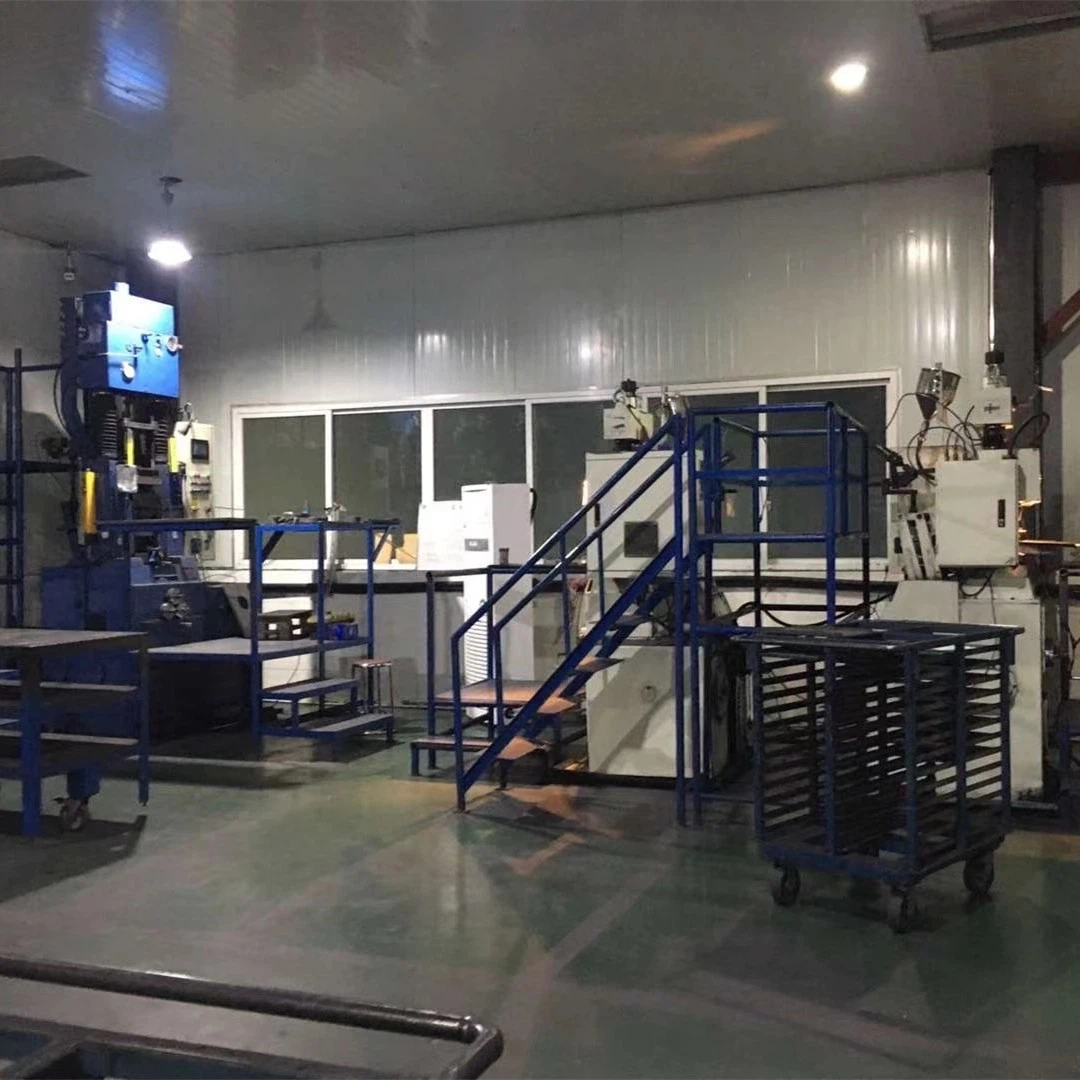
Zigong Sansheng Carbide Co., Ltd. is located in the high-tech industrial park of Zigong City, Sichuan Province. It is a professional manufacturer engaged in the research and development, production, product deep processing and domestic and foreign trade sales. The company has strong technical force, advanced production technology and production equipment, and is one of the best suppliers of tungsten series cemented carbide in China.


FAQ
As one of the leading tungsten carbide dies manufacturers and suppliers in China, we warmly welcome you to buy tungsten carbide dies for sale here and get free sample from our factory. All customized products are with high quality and competitive price.
strong tungsten carbide brazed tip, tungsten carbide button for vertical drilling, durable tungsten carbide brazed tip