

Tungsten Carbide Studs
Why Choose Us
Strong R&D capabilities
The company has more than 20 patents in cemented carbide and deep processing technology, new materials, and new technologies, and has strong research and development capabilities.
Production Market
The whole China market, South Asia, south-eastern Asia, East Asia, North America,South America, Europe, etc countries and regions.
Professional team
We have a professional quality control team that follows the ISO9001:2015 system.
Provide OEM service
We work on OEM orders. Which means size, quantity, design, packing solution, etc will depend on your requests.
Tungsten carbide studs, or cemented carbide studs, are widely used to cut the large size of materials into small sizes. They are made from tungsten carbide powder by powder metallurgy technique. Tungsten carbide studs have high hardness, strength, wear resistance, and impact resistance. So they can improve the working efficiency and service life of the High-Pressure Grinding Rollers.
-
 Pin Stud for HPGRTungsten carbide pin studs for high pressure grinding roller(HPGR), mainly used on roller press,Add to Inquiry
 -
 Tungsten Carbide StudTungsten carbide studs are mainly used on the rollers of roller presses. Compared to traditionalAdd to Inquiry
 -
 Tungsten Carbide Stud for HPGRHPGR hard alloy column nails ensure wear resistance during normal use, with continuous nail,Add to Inquiry


Email: richard@sanshengalloy.com
- Add: No.39, Fuchuan Rd., National High-Tech Development Zone, Zigong, Sichuan, China
High hardness
Tungsten carbide studs is an extremely hard material, which is only after diamond. The hardness of tungsten carbide studs makes it an ideal material for cutting and machining tools. Hardness is an important property of tungsten carbide studs, which is tested by the Rockwell Hardness Tester. A pointed diamond indenter is forced into the tungsten carbide studs and the depth of the hole is a measure of the hardness. In manufacturing tungsten carbide studs, many factors will affect the hardness, such as the amount of cobalt, the grain size, the amount of carbon, and also the manufacturing process.
High melting point
Tungsten carbide studs has a melting point of approximately 5,700℃, which is significantly higher than the melting point of most other metals. This high melting point makes tungsten carbide studs ideal for use in high-temperature applications. At the same time, the high melting point makes tungsten carbide studs cannot be manufactured by normal forging technology. Tungsten carbide studs products are manufactured by powder metallurgy, through mixing, milling, compacting, sintering, and checking.
Chemically stable
Tungsten carbide studs is composed of tungsten and carbon atoms, which are both stable to oxygen and other elements. Tungsten carbide studs is highly resistant to chemical attack and does not corrode in most environments. This chemical inertness makes tungsten carbide studs an ideal material for use in chemical processing equipment and areas where corrosion resistance is required.
Low coefficient of thermal expansion
The mean coefficient of thermal expansion indicates the amount of expansion when the tungsten carbide studs is heated. The expansion of the tungsten carbide studs is following the expansion of the temperature. The more binder powder in the tungsten carbide studs, the higher the thermal expansion of the tungsten carbide studs will be. Tungsten carbide studs has a very low coefficient of thermal expansion, meaning that it expands very little when heated. This property makes tungsten carbide studs ideal for precision instruments and applications where dimensional stability is required.
The Magical Effect of Tungsten Carbide Studs on Car Tires
The tire stud on the snowy road surface includes a flange on the cylindrical nail body at the head of the core, the wing portion at the middle portion, and the lower end portion, and the wing portion and the flange form an acute angle with the nail body. When the stud is used, it is inserted into the tire tread, which is not only easy to install, but also has an anti-shedding effect. Depending on the application and the groove type, the specifications have different requirements, but the material requirements are: wear resistance, low temperature resistance, high hardness and so on.
Compared with non-slip nails of other materials, the studs of tungsten carbide materials have many superior properties, such as high hardness and high wear resistance; low pressure on the surface, preventing car slip on the basis of ensuring minimum damage; installation and Easy to disassemble and reusable.
How to Tungsten Carbide Studs?
Collection
The first step in the recycling process involves collecting used or damaged carbide studs. Facilities often have designated collection bins for carbide materials, making it easier to segregate them from other recyclables.
Processing
The cleaned carbide studs are then processed, which typically involves crushing and grinding into a powder. This powder can then be used as a raw material for producing new tungsten carbide products, including studs.

Cleaning
Before the recycling process can begin in earnest, the collected carbide studs must be cleaned thoroughly. This step ensures that any contaminants or residues that could potentially interfere with the recycling process are removed.
Re-purposing
Aside from recycling, carbide studs can also find new life in different applications. Creative re-purposing strategies can extend the lifecycle of carbide materials, further contributing to waste reduction and sustainability efforts.
Here Are Several Reasons for The Wear of Tungsten Carbide Studs
Abrasive wear
With the repeated operation of high pressure grinding roller to grind large size of materials or hard materials, the tungsten carbide studs are enduring the abrasive wear of the grinding and are damaged on the surface of the tungsten carbide.
Shear force damage
Shear force is the force in two opposite directions produced in the grinding. As we all know, tungsten carbide products with higher hardness are always lower in transverse rupture strength. So it is easy to explain why the high hardness tungsten carbide studs can also be inevitably damaged while grinding large sizes of materials.
Unsuitable tungsten carbide
When we are choosing the tungsten carbide studs, we should take into consideration of the materials that will be ground and the condition that the tungsten carbide studs will be applied.
How to Choose Tungsten Carbide Studs
Raw Material
You have no choice but to go with the Tungsten Carbide Studs that are created from completely unprocessed materials. The manufacturer is required to do chemical tests on each individual bat of the raw material.
Grades
Tungsten Carbide Studs are used in the production of cutting tools, which are then used to machine a variety of metals under a variety of machining conditions. It is necessary for the manufacturers of Tungsten Carbide Studs to do research and produce a variety of grades of Tungsten Carbide Studs so that they can cater to certain uses. It can ensure that you have the ability to select an appropriate grade for your application.
The Skill Involved In Tungsten Carbide Studs
There are several firms that have a great deal of expertise in the production of tungsten carbide goods. After seeing that there is a sizable need for Tungsten Carbide Studs, they decide to begin manufacturing cemented Tungsten Carbide Studs. despite the fact that the manufacturing process for tungsten Tungsten Carbide Studs is quite similar to those of other carbide products. Despite this, there are still distinctions between the two. For instance, if someone lacks expertise, they won't be able to manage how straight the hole is in the Tungsten Carbide Studs that have straight coolant rods with two and three holes.
The Manufacturing Process
Tungsten Carbide Studs and other tungsten carbide products are often produced in the same factory by the majority of the carbide producers alongside one another by the same workforce. It will be to everyone's advantage if the facility that makes cemented carbide also has a separate manufacturing line for the Tungsten Carbide Studs. They are able to ensure that quality control is maintained throughout every procedure.
Production Equipment's
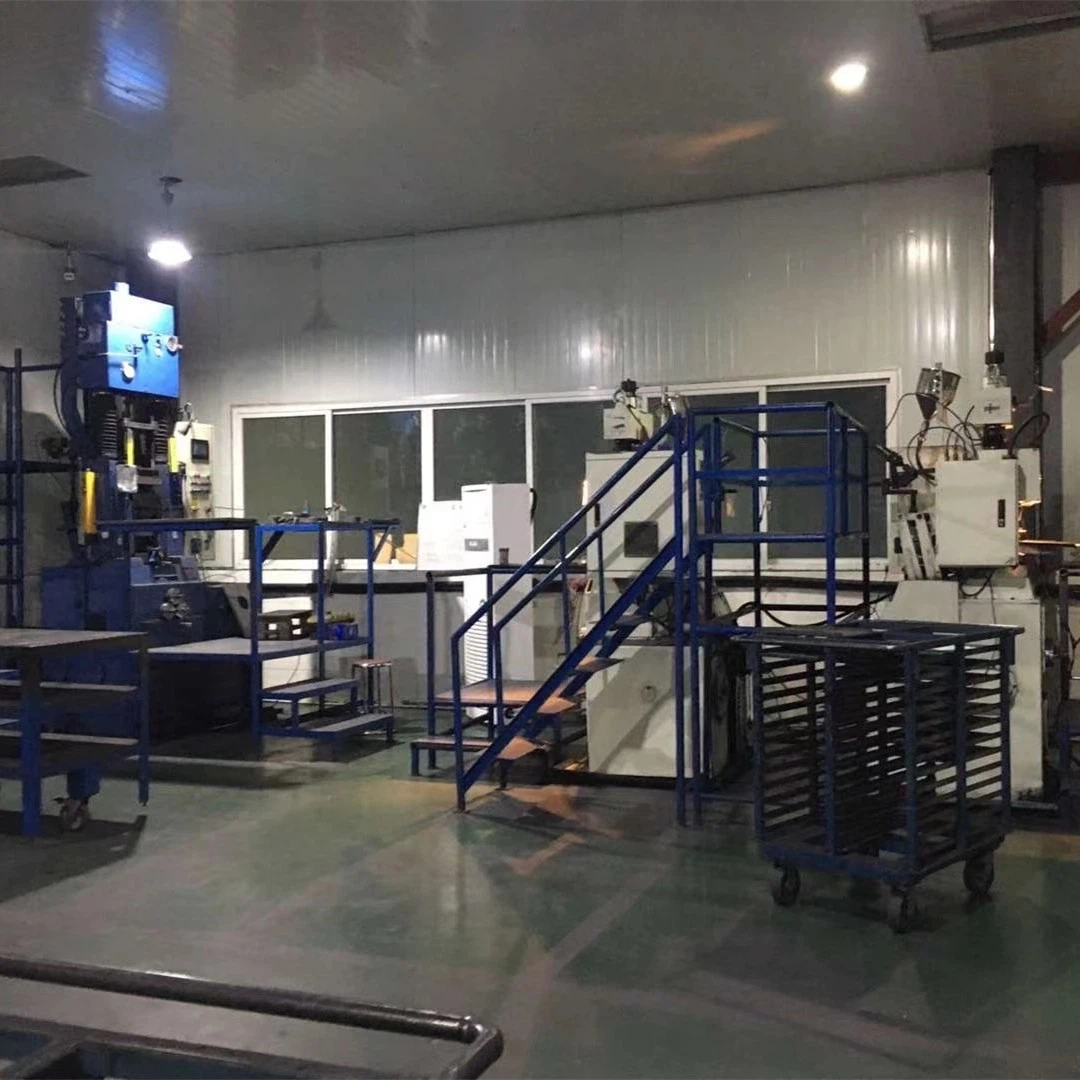
Even though the engineers and employees have a wealth of knowledge, they are unable to create tungsten Tungsten Carbide Studs of a high degree of quality if they do not have access to sophisticated equipment. This is because advanced equipment is highly significant. The powder spray tower, the isostatic pressing machine or extrusion machine, and the sintering machine are the primary pieces of equipment.
The Quality Assurance and Control System
A stringent quality control system is required throughout the whole process, beginning with the raw material and continuing through the production process and ending with the completed Tungsten Carbide Studs. Not only should the final Tungsten Carbide Studs have their sizes checked piece by piece, but the physical performance of the rods, including its hardness, density, anti-bending strength, and metallographic, should also be evaluated.
Process Of Tungsten Carbide Studs
Manufacturing powder
The first step in making tungsten carbide studs is to create the powder. The powder is a mixture of WC and cobalt, which are mixed together in a certain proportion. For example, if the customer needs a carbide head die, the carbide grade YG20 is required, and the quantity is 100 kg. The powder mill then mixes about 18 kg of cobalt powder with 80 kg of WC powder, and the remaining 2 kg of other metal powders will be added according to the company's formula of YG20 grade. All powder will be put into the grinder. Milling machines are available in different capacities, such as samples of 5 kg, 25 kg, 50 kg, 100 kg or larger.
Spray and dry
After the powder is mixed, the next step is spraying and drying. Use a spray tower to improve the physical and chemical properties of tungsten carbide powder. Powders made with spray towers have better performance than other machines. After completing this process, the powder is in a "ready to press" state.
Pressed powder
The "to be pressed" powder can be pressed after passing the test. Tungsten carbide studs have different pressing methods, or different forming methods. For example, if a factory produces carbide saw tips, an automatic press is used; if a large carbide mold is required, a semi-manual press is used. There are other forming methods for tungsten carbide products, such as cold isostatic pressing (CIP for short) and extruders.
Sintering
Sintering is a post-pressing process and the final step in producing tungsten carbide studs, which are used as high-hardness, high-strength engineering metals for cutting, wear-resistant, drilling or other applications. The sintering temperature is as high as 1400℃. There will be some differences in temperature for different ingredients. At such high temperatures, the adhesive can bind the WC powder and form a strong structure. The sintering process can be done with or without the use of a high isostatic pressure gas press (HIP).
Zigong Sansheng Carbide Co., Ltd. is located in the high-tech industrial park of Zigong City, Sichuan Province. It is a professional manufacturer engaged in the research and development, production, product deep processing and domestic and foreign trade sales. The company has strong technical force, advanced production technology and production equipment, and is one of the best suppliers of tungsten series cemented carbide in China.


FAQ
As one of the leading tungsten carbide studs manufacturers and suppliers in China, we warmly welcome you to buy tungsten carbide studs for sale here and get free sample from our factory. All customized products are with high quality and competitive price.
brazed tungsten carbide wear tip, tungsten carbide wear tip, tungsten carbide factory tip