

Tungsten Carbide Inserts
Why Choose Us
Strong R&D capabilities
The company has more than 20 patents in cemented carbide and deep processing technology, new materials, and new technologies, and has strong research and development capabilities.
Production Market
The whole China market, South Asia, south-eastern Asia, East Asia, North America,South America, Europe, etc countries and regions.
Professional team
We have a professional quality control team that follows the ISO9001:2015 system.
Provide OEM service
We work on OEM orders. Which means size, quantity, design, packing solution, etc will depend on your requests.
Tungsten carbide inserts are cutting tools made from hard tungsten carbide material. These inserts are specifically designed to be easily replaceable within cutting tools like milling cutters, drills, and turning tools.tungsten carbide inserts are widely serving in various industries for cutting and shaping. They can do machining hard materials like metals, wood, plastics, and composites. They find applications in metalworking, woodworking, mining, manufacturing, and other fields requiring precision cutting.
-
 Tungsten Carbide ChiselThe distance between the alloy sheet and the surface of the groove is 0.3-0.5mm on each side whenAdd to Inquiry
 -
 Tungsten Carbide Carbide Inserts K034Compensation gaskets can be made of low-carbon steel wire mesh or copper sheets, with a width andAdd to Inquiry
 -
 Tungsten Carbide Insert for Rock Drill BitsThe distance between the alloy sheet and the surface of the groove is 0.3-0.5mm on each side whenAdd to Inquiry


Email: richard@sanshengalloy.com
- Add: No.39, Fuchuan Rd., National High-Tech Development Zone, Zigong, Sichuan, China
High hardness:The hardness of tungsten carbide inserts varies from 83hra to 94hra. The high hardness makes tungsten carbide inserts wears up to 100 times longer than steel in conditions including abrasion, erosion, and galling. Wear-resistance of tungsten carbide insertse is better than that of wear-resistance tool steels.
Heat and oxidation resistance:To produce tungsten carbide inserts, the carbide material will be sintered in the furnace at a high temperature of around 1400 centigrade. Tungsten-base carbides perform well up to about 1000°f in oxidizing atmospheres and 1500°f in non-oxidizing atmospheres.
Dimensional stability:Tungsten carbide inserts undergoes no phase changes during heating and cooling and retains its stability indefinitely. No heat treating is required.
Surface finishes:The finish of an as-sintered part will be about 50 micro inches. Surface, cylindrical or internal grinding with a diamond wheel will produce 18 micro inches or better and can produce as low as 4 to 8 micro inches. Diamond lapping and honing can produce 2 micro inches and with polishing as low as 1/2 micro inch.
Application of Tungsten Carbide Inserts
Surgical Tools
So many medical professionals rely on accurate and durable tools for all kinds of medical procedures and tungsten carbide inserts is one of the most popular. Surgical tools are one of the most notable uses for carbide. Although the base of the tool itself is typically crafted with titanium or stainless steel, the tip of the tool's blade or the end of the utensil is made from tungsten carbide inserts.
Jewelry
For both jewelry shaping and the jewelry itself, tungsten carbide inserts is a great material for jewelers across the globe. Because tungsten falls just behind diamonds on the Moh's hardness scale, it's a great material for wedding rings and other pieces of jewelry. Additionally, jewelers need to rely on efficient tools to work on these pieces and tungsten carbide inserts is great for that. Tungsten jewelry looks nice, is extremely hard, and is often more cost effective than gold — what's not to like?
Nuclear Science
Tungsten carbide inserts is also used as an effective neutron reflector. This strong material has also been used during early investigations into nuclear chain reactions, specifically for weapons protection. Although this industry doesn't use tungsten material as much as perhaps some of the others, it's imperative that everyone handling any materials do so as delicately as possible.
Types of Tungsten Carbide Inserts
Round-shaped Carbide Insert
The round-shaped carbide insert is mainly used on the finishing tool. There are two round types of cutters and both of these two types can be used to finish a smoother surface on your project. It is ideal for processing on curved, concave surfaces, and also can be used for hollowing jobs and common turning works.
The Diamond-Shaped Carbide Insert
The Diamond-shaped carbide insert looks just like its name. The diamond shape can decorate your project in just about anything you can think of. Such as coves, beads and grooves. Any hard-to-reach places you can use to reach and clean them up.
The Triangle Straight Carbide Insert
This type of insert is used for woodturning working lathe tools. Also, the triangle straight carbide insert can be used on numerous spiral/helical planer cutter head systems. The sub-micron grades make the knives have a longer tool life than other inserts.
The Square Shaped Carbide Inserts
This wonderful tungsten carbide insert with square shape head cutter has four sharp edges, every edge is available and you can rotate to another side if there’s a blunt edge. Use this insert with round inserts, you can get a perfect ending on curving, concaving, hollowing and etc.

So, what's the secret sauce behind tungsten carbide inserts? Well, it all comes down to the unique properties of tungsten carbide itself. This material is not only incredibly hard but also boasts impressive wear resistance, making it an ideal choice for cutting tools that need to stand up to tough conditions. Tungsten carbide inserts are typically made through a process of mixing tungsten carbide powder with a binder material, such as cobalt, and then pressing and sintering the mixture to create a solid piece.
How to Choose Tungsten Carbide Inserts
Rich experience
Always go for a company with relative experience in this industry.ideally, a manufacturer with rich experience is an added advantage since you are certain of getting the right type of tool for your needs.
Advanced equipment
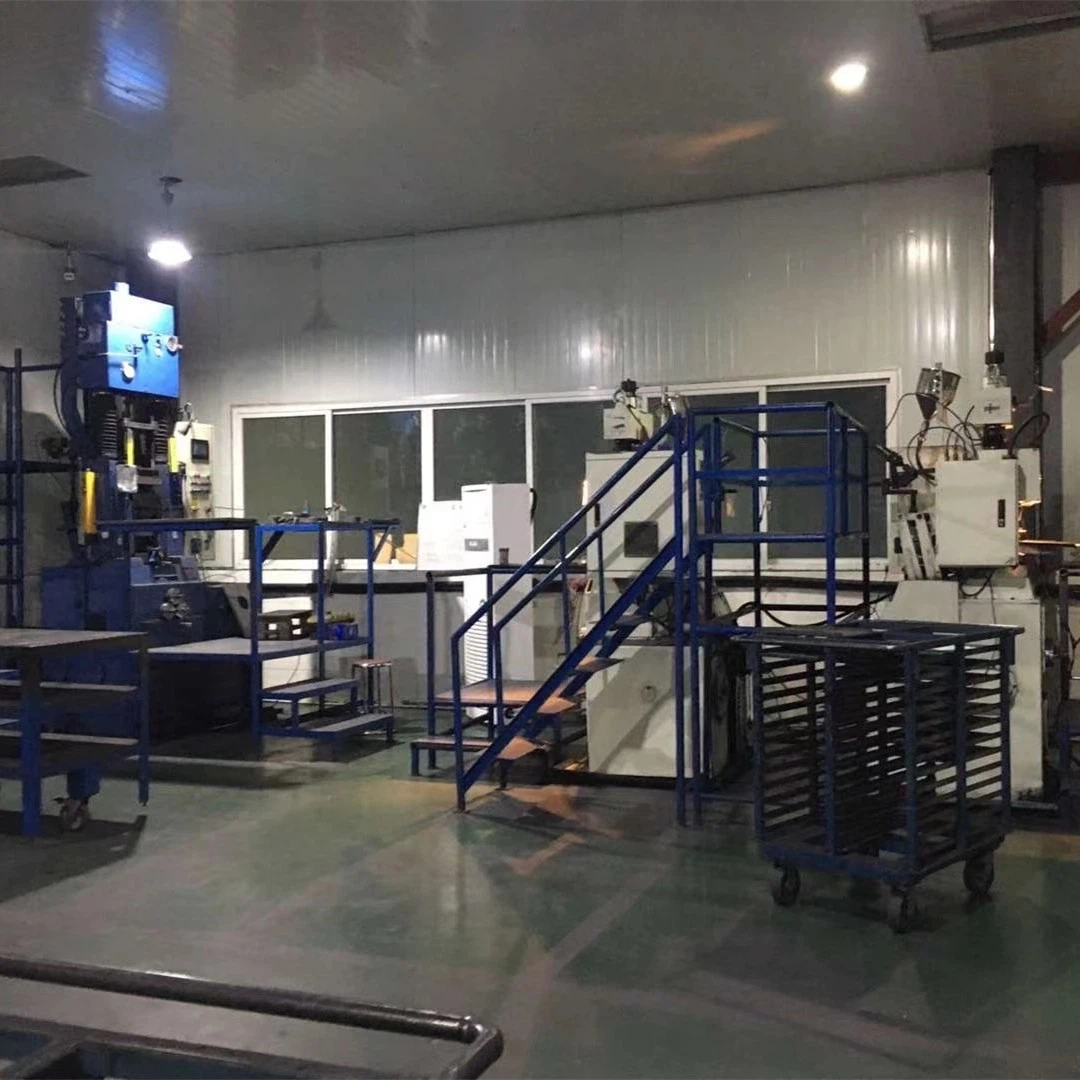
Tungsten carbide inserts should have excellent machinery and facilities for manufacturing these tools.consider a manufacturer investing reasonably in r&d, skillful human resources, and a high cnc production line.
Broad variety
Different tungsten carbide inserts require different inserts shapes, sizes, and designs.finding a manufacturer with the capacity to produce a large variety is advantageous since it enhances convenience.also, it makes it easy for you to determine the right type, which suits your specific tooling application demands.
Fast turnaround time
You must look into the average lead time a manufacturer takes to produce tungsten carbide inserts, all factors constant.choose a company with a dependable and high-quality supply chain. This ensures short delivery times with assured quality service.
Quality assurance
Typically, all tungsten carbide inserts manufacturers must comply with specific quality standards depending on the target market.always choose a company that conforms to all the necessary quality assurance standards accordingly.
After-sales services
Use of tungsten carbide inserts can be a bit technical given it involves use of different machines hence requires different settings.therefore, you can consider a manufacturer who is reliable and ready to offer well-informed suggestions on the working procedures of these tools.you may also consider a company that can send its representatives to understand the challenges you could be facing with the tools.
How are Tungsten Carbide Inserts produced?
Tungsten oxide is mixed with carbon and processed in a special furnace to form tungsten carbide, the main raw material for all carbide. Tungsten carbide is an extremely hard yet brittle material used as the main component of cemented carbide. Tungsten carbide is mixed with cobalt, which is critical to the properties of the carbide. The more cobalt there is, the better the toughness of the cemented carbide; conversely, the harder and more wear-resistant it is. The weight proportioning of the different ingredients is carried out with the utmost precision. The error of a batch of 420 kilograms of raw materials cannot be greater than 20 grams.
First, the basic shape and size are obtained by pressing with punches and dies in a highly automated CNC-controlled stamping machine. After pressing, the blade looks very similar to a real carbide blade, but is nowhere near as hard as it should be.
To harden, the blades are heat treated at 1500 degrees Celsius for 15 hours. Through a sintering process, the molten cobalt is bonded to the tungsten carbide particles. The sintering furnace process does two things: the insert shrinks significantly, and the shrinkage must be precise to get the correct tolerances; and second, the powder mixture is transformed into a new material with metallic properties, called cemented carbide. The blade is now as hard as expected, but not ready for delivery. Before proceeding to the next production step, the dimensions of the inserts are carefully checked in a coordinate measuring machine.
Only through diamond grinding can carbide inserts be given an accurate shape. The blade undergoes various grinding processes according to geometric angle requirements. Most grinders have built-in measurement controls that check and measure the blade in several stages.
The cutting edges are treated to obtain the correct shape for maximum wear resistance for the required machining. These blades can be brushed with a special brush with a silicon carbide coating, and regardless of the processing method used, the final result must be checked. 90%-95% of all blades have some kind of coating, make sure there are no foreign particles on the surface of the blade, prevent these particles from adhering under the coating and affecting the performance of the knife.
Chemical vapor deposition (CVD) and physical vapor deposition (PVD) are two existing coating methods, and the method chosen depends on the material and processing method. Coating thickness depends on the blade application, and the coating determines the blade’s durability and blade life. The technical know-how is that the surface of the cemented carbide is coated with many extremely thin coatings, such as titanium carbide, aluminum oxide and titanium nitride, which can greatly increase the service life and durability.
Why Should You Use Tungsten Carbide Inserts?
In addition to its high cost per unit, carbide is also very brittle, making it more susceptible to breaking and chipping when compared to other typical tool materials. Due to these factors, carbide cutting tips are often provided as small inserts within larger cutting tools that have steel hilts. The shank of the hilt is usually made of carbon, which is a more suitable material for the shank of the carbide cutting tip. As such, the carbide surface at the cutting interface is able to provide the benefits of using carbide without incurring the high costs and brittleness of making the whole tool from carbide. As with many of the modern lathe tools and endmills, most face mills these days have carbide inserts as well in them.
Coatings are sometimes used in order to increase the lifetime of carbide inserts. Generally, coatings designed to increase a tool’s hardness or lubricity will also increase the tool’s lubricity. By coating a cutting tool, it will be possible for the cutting edge to pass cleanly through things without the material galling or sticking to it. Besides lowering the temperature associated with the cutting process, the coating will also increase the tool’s longevity by preventing the tools from getting stripped out. As a rule, the coating is deposited using either thermal CVD or mechanical PVD methods, both of which are usually done at lower temperatures, depending on the application.
There is no doubt that tungsten carbide inserts can withstand pressure when it comes to performance under pressure. In order to produce this durable, extremely strong metal, grains of tungsten carbide are cemented into nickel or cobalt to create cement. Tungsten carbide produces a material second only to diamond in terms of hardness.
The upcoming work will be easy for you once you have gained the knowledge of how to identify carbide inserts as a newbie. Carbide inserts are cutting tools that can be used to cut a wide variety of materials with high precision. Despite this, there are certain types of carbide inserts that can be used for cutting specific types of materials since not every insert can cut all types of materials. Thus, it is important for you to know what type of inserts are you using and when to use them.
How to Maintain Tungsten Carbide Inserts
Optimize cutting parameters
Ensure that the cutting speed, feed rate, and depth of cut are properly adjusted for the specific material and machining operation. Using appropriate cutting parameters helps minimize wear and heat generation, thus extending the life of the tungsten carbide inserts.
Use suitable cooling and lubrication
Proper cooling and lubrication during machining are crucial to reduce friction and heat. Choose the right coolant or lubricant for the application to improve chip evacuation, reduce tool wear, and extend the service life of the inserts.
Select the correct grade and coating
Different grades and coatings of tungsten carbide inserts offer varying levels of hardness, toughness, and wear resistance. Select the appropriate grade and coating based on the material being machined and the cutting conditions to enhance tool life and performance.
Implement effective chip control
Efficient chip control techniques, such as using chip breakers or chip evacuation systems, help prevent chip recutting and built-up edge formation. This reduces the stress on the inserts and improves their cutting performance and longevity.
Perform regular tool inspection
Routinely inspect tungsten carbide inserts for wear, damage, or any signs of deterioration. Replace worn or damaged inserts promptly to maintain precision and prevent further issues that can impact tool life.
Proper tool handling and storage
Handle tungsten carbide inserts with care to avoid accidental damage. Store them in a clean, dry environment to prevent corrosion. Use dedicated toolboxes or holders to protect the inserts from physical contact and maintain their sharpness.
Zigong Sansheng Carbide Co., Ltd. is located in the high-tech industrial park of Zigong City, Sichuan Province. It is a professional manufacturer engaged in the research and development, production, product deep processing and domestic and foreign trade sales. The company has strong technical force, advanced production technology and production equipment, and is one of the best suppliers of tungsten series cemented carbide in China.


FAQ
As one of the leading tungsten carbide inserts manufacturers and suppliers in China, we warmly welcome you to buy tungsten carbide inserts for sale here and get free sample from our factory. All customized products are with high quality and competitive price.
brazed tungsten carbide tip, tungsten carbide tip, tungsten carbide button for deep drilling