

In the industrial landscape, hard facing materials play a pivotal role in enhancing the durability and performance of various components. As a seasoned hard facing material supplier, I've witnessed firsthand the critical importance of adhering to strict quality standards. In this blog, I'll delve into the key quality standards for hard facing materials, shedding light on what makes a high - quality product in this field.
Chemical Composition
One of the fundamental quality aspects of hard facing materials is their chemical composition. Different applications demand specific chemical make - ups to ensure optimal performance. For instance, in high - wear environments, materials with a high content of carbide - forming elements such as tungsten (W), chromium (Cr), and vanadium (V) are often preferred.
Tungsten carbide (WC) is a widely used component in hard facing materials. It provides excellent hardness and wear resistance. Our Coarse Grained WC/Ni Based Alloy is a prime example. The coarse - grained WC particles in a nickel - based matrix offer superior abrasion resistance, making it suitable for applications like mining equipment and earth - moving machinery.
Chromium is another essential element. It forms chromium carbides, which contribute to both wear resistance and corrosion resistance. In some hard facing alloys, a certain percentage of chromium is added to enhance the material's ability to withstand harsh chemical environments in addition to mechanical wear.
The chemical composition must be precisely controlled during the manufacturing process. Even a slight deviation can significantly affect the material's properties. Sophisticated analytical techniques such as spectroscopy are used to ensure that the chemical composition meets the specified standards.
Hardness
Hardness is a crucial property of hard facing materials. It directly relates to the material's ability to resist wear, abrasion, and deformation. Generally, a higher hardness value indicates better wear resistance.
There are different methods to measure the hardness of hard facing materials, such as the Rockwell, Brinell, and Vickers hardness tests. The choice of test method depends on the nature of the material and the specific requirements of the application.
For example, in applications where the hard facing material is subjected to high - stress abrasion, a very high hardness level is required. Our WC - 17Co Thermal Spraying material typically has a high hardness due to the presence of tungsten carbide particles in a cobalt matrix. This makes it ideal for applications like valve seats and pump impellers, where resistance to abrasive wear is of utmost importance.
However, it's important to note that hardness is not the only factor. An overly hard material may be brittle and prone to cracking, especially under impact loading. Therefore, a balance must be struck between hardness and toughness to ensure the overall performance of the hard facing material.
Microstructure
The microstructure of hard facing materials has a profound impact on their properties. A well - defined and uniform microstructure is essential for consistent performance.
In hard facing alloys, the microstructure often consists of a matrix phase and a reinforcing phase. For example, in a WC - based hard facing material, the tungsten carbide particles are the reinforcing phase, and the metal matrix (such as nickel, cobalt, or iron) is the continuous phase.
The size, shape, and distribution of the reinforcing particles in the matrix are critical. Fine and evenly distributed particles generally result in better mechanical properties. For instance, in WC - 10Co4Cr Thermal Spraying, the proper distribution of tungsten carbide particles in a cobalt - chromium matrix ensures good wear resistance and toughness.
Heat treatment processes can also be used to modify the microstructure of hard facing materials. By controlling the heating and cooling rates, the size and morphology of the phases can be optimized, leading to improved performance.
Bonding Strength
When hard facing materials are applied to a substrate, the bonding strength between the hard facing layer and the substrate is of great significance. A strong bond ensures that the hard facing layer remains intact during service and can effectively protect the substrate from wear and corrosion.
There are several factors that affect the bonding strength. The surface preparation of the substrate is crucial. The substrate surface must be clean, free of contaminants, and have a suitable roughness to promote good adhesion.
The deposition process also plays a vital role. Different deposition methods, such as welding, thermal spraying, and cladding, have different effects on the bonding strength. For example, in thermal spraying, the particle velocity, temperature, and the type of spray gun can all influence the bonding quality.
Testing the bonding strength is an important part of quality control. Methods such as pull - off tests and shear tests are commonly used to evaluate the bond between the hard facing layer and the substrate.
Porosity
Porosity is an undesirable characteristic in hard facing materials. Porous hard facing layers can reduce the material's strength, wear resistance, and corrosion resistance.
During the manufacturing process, factors such as improper powder feeding, insufficient melting, or gas entrapment can lead to porosity. To minimize porosity, advanced manufacturing techniques and strict process control are required.
For example, in thermal spraying processes, optimizing the spraying parameters such as powder feed rate, gas flow rate, and spraying distance can help reduce porosity. Additionally, post - treatment processes like hot isostatic pressing (HIP) can be used to eliminate internal pores and improve the material's density.
Thermal Stability
In many industrial applications, hard facing materials are exposed to high temperatures. Therefore, thermal stability is an important quality criterion.
A thermally stable hard facing material should maintain its hardness, strength, and other mechanical properties at elevated temperatures. This is particularly important in applications such as aerospace components, where parts may be exposed to extreme heat during operation.

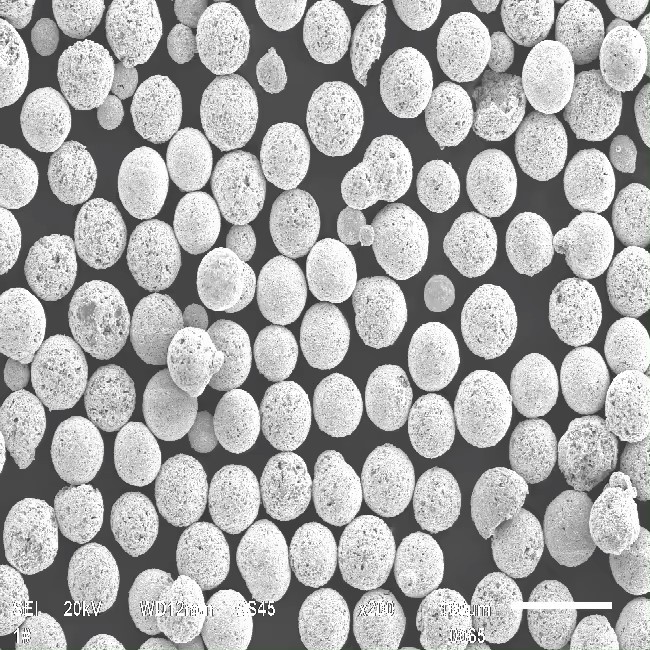
Materials with a high melting point and good oxidation resistance are preferred for high - temperature applications. For example, some nickel - based hard facing alloys have excellent thermal stability due to the formation of a protective oxide layer on the surface at high temperatures.
Consistency
Consistency is key in the supply of hard facing materials. Customers rely on the same quality of products for their ongoing operations. As a supplier, we must ensure that each batch of hard facing material meets the same strict quality standards.
This requires a well - established quality management system. From raw material sourcing to the final product inspection, every step of the production process is carefully monitored. Statistical process control (SPC) techniques are used to track and control the quality parameters, ensuring that any variations are detected and corrected in a timely manner.
Conclusion
As a hard facing material supplier, we understand that meeting and exceeding these quality standards is not only a commitment to our customers but also a guarantee of the long - term success of their operations. The quality of hard facing materials directly impacts the performance and lifespan of the components they are applied to.
Whether you are in the mining, manufacturing, aerospace, or any other industry that requires high - performance hard facing solutions, we are here to provide you with materials that meet the most stringent quality requirements. If you are interested in our hard facing materials or have any specific requirements, we invite you to contact us for a detailed discussion and procurement negotiation. Our team of experts is ready to assist you in finding the best hard facing solution for your application.
References
- ASM Handbook Volume 5: Surface Engineering. ASM International.
- Welding Handbook, Volume 2: Welding Processes. American Welding Society.
- Thermal Spray Coatings: From Research to Industrial Applications. Springer.


