

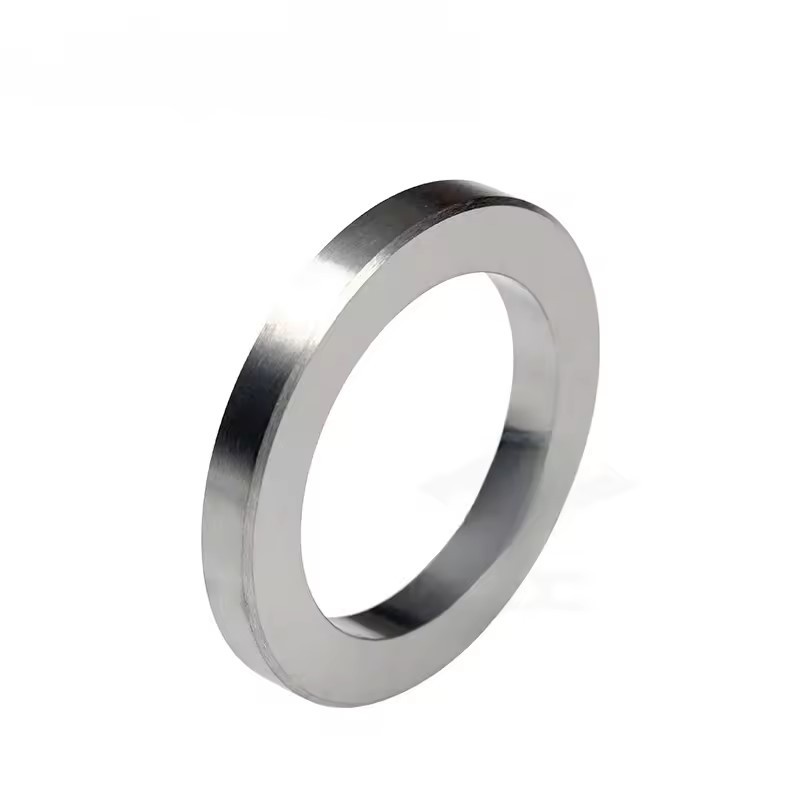
As a supplier of tungsten carbide seal rings, I've delved deeply into the world of these remarkable components. Tungsten carbide seal rings are known for their outstanding hardness, wear - resistance, and corrosion - resistance. However, one aspect that often requires in - depth understanding is the coefficient of friction variation of these seal rings.
Understanding the Coefficient of Friction
The coefficient of friction is a measure of the amount of friction between two surfaces in contact. For tungsten carbide seal rings, it is a critical parameter as it affects the performance and lifespan of the seals. A lower coefficient of friction generally means less energy loss due to friction, reduced wear, and smoother operation. On the other hand, a higher coefficient of friction might lead to increased heat generation, faster wear, and potential seal failure.
Factors Affecting the Coefficient of Friction Variation
Surface Roughness
The surface roughness of tungsten carbide seal rings plays a significant role in the coefficient of friction. A smoother surface typically results in a lower coefficient of friction. During the manufacturing process, the grinding and polishing operations are crucial to achieve the desired surface finish. For instance, if the surface has large asperities, these can interlock with the mating surface, increasing the frictional force. Advanced machining techniques can be employed to reduce surface roughness and thus minimize the coefficient of friction.
Lubrication
Lubrication is another key factor. When a lubricant is present between the tungsten carbide seal ring and the mating surface, it forms a thin film that separates the two surfaces. This film reduces direct contact and friction. The type of lubricant used, its viscosity, and the lubrication method all influence the coefficient of friction. For example, in some applications where high - temperature resistance is required, synthetic lubricants with specific additives may be used. These lubricants can maintain their properties at elevated temperatures and effectively reduce friction.
Load and Pressure
The load applied on the seal ring and the contact pressure also impact the coefficient of friction. As the load increases, the contact area between the seal ring and the mating surface may change, and the deformation of the asperities on the surface can occur. Higher loads usually lead to an increase in the coefficient of friction. In applications where the seal ring is subjected to high - pressure environments, such as in hydraulic systems, special design considerations are needed to manage the frictional forces.
Material of the Mating Surface
The material of the surface that the tungsten carbide seal ring comes into contact with can cause significant variation in the coefficient of friction. Different materials have different surface properties, hardness, and chemical compositions. For example, if the mating surface is made of a soft metal, it may deform more easily under the frictional forces, leading to a different coefficient of friction compared to a harder material.
Applications and Coefficient of Friction Requirements
Industrial Pumps
In industrial pumps, tungsten carbide seal rings are widely used. The coefficient of friction needs to be carefully controlled to ensure efficient pump operation. A low coefficient of friction reduces the power consumption of the pump and minimizes wear on the seal rings. This is especially important in continuous - operation pumps where long - term reliability is crucial.
Automotive Engines
In automotive engines, seal rings are used in various components such as pistons and valves. The coefficient of friction affects the engine's efficiency and performance. A lower coefficient of friction can improve fuel economy and reduce emissions by minimizing the energy lost to friction.
Our Offerings as a Supplier
As a supplier of tungsten carbide seal rings, we understand the importance of controlling the coefficient of friction. We offer a wide range of tungsten carbide seal rings with different specifications to meet the diverse needs of our customers. Our products are made from high - quality tungsten carbide materials, and we use advanced manufacturing processes to ensure consistent surface quality and performance.
We provide Carbide Valve Ball and Seat which are often used in conjunction with our seal rings. These components are designed to work together to provide a reliable sealing solution. Our Tungsten Carbide Seal for Mine is specifically engineered to withstand the harsh conditions in mining applications, where the coefficient of friction needs to be stable under high loads and abrasive environments. Additionally, we also offer Tungsten Carbide Non - standard Parts to meet the unique requirements of our customers.
Importance of Controlling Coefficient of Friction in Different Environments
High - Temperature Environments
In high - temperature environments, the coefficient of friction of tungsten carbide seal rings can change due to thermal expansion and changes in the material properties. For example, at high temperatures, the lubricant may degrade, reducing its effectiveness in reducing friction. Our products are designed to maintain stable coefficient of friction even at elevated temperatures. We use special alloys and heat - treatment processes to enhance the high - temperature performance of our seal rings.
Corrosive Environments
In corrosive environments, the surface of the tungsten carbide seal ring may be affected, which can in turn change the coefficient of friction. Corrosion can cause pitting and roughening of the surface, increasing the frictional forces. Our seal rings are coated with anti - corrosion materials to protect the surface and maintain a stable coefficient of friction.
Testing and Quality Assurance
We conduct extensive testing on our tungsten carbide seal rings to ensure that the coefficient of friction meets the required standards. We use advanced friction - testing equipment to measure the coefficient of friction under different conditions. This allows us to provide our customers with accurate performance data and ensure the quality of our products.
Contact Us for Procurement
If you are in need of high - quality tungsten carbide seal rings with well - controlled coefficient of friction, we are here to assist you. Whether you have specific requirements for your application or need general advice on seal ring selection, our team of experts is ready to help. We look forward to the opportunity to discuss your needs and provide you with the best solutions.

References
- ASTM International. "Standard Terminology Relating to Friction, Wear, and Lubrication." ASTM G40 - 19a.
- Bhushan, Bharat. "Principles and Applications of Tribology." Wiley, 2013.
- Czichos, Horst, Peter Habig, and Klaus - Dieter Heinzel, eds. "Encyclopedia of Tribology." Springer, 2009.


