

Hey there! As a supplier of tungsten carbide strips, I've been getting a lot of questions lately about the effect of low-temperature cutting on the performance of these strips. So, I thought I'd dive into this topic and share what I've learned.
First off, let's talk a bit about tungsten carbide strips. Tungsten carbide is an extremely hard and wear-resistant material, which makes it ideal for a wide range of applications, especially in cutting tools. Our Tungsten Carbide Strips are used in various industries, from metalworking to woodworking, and even in the production of electronic components.
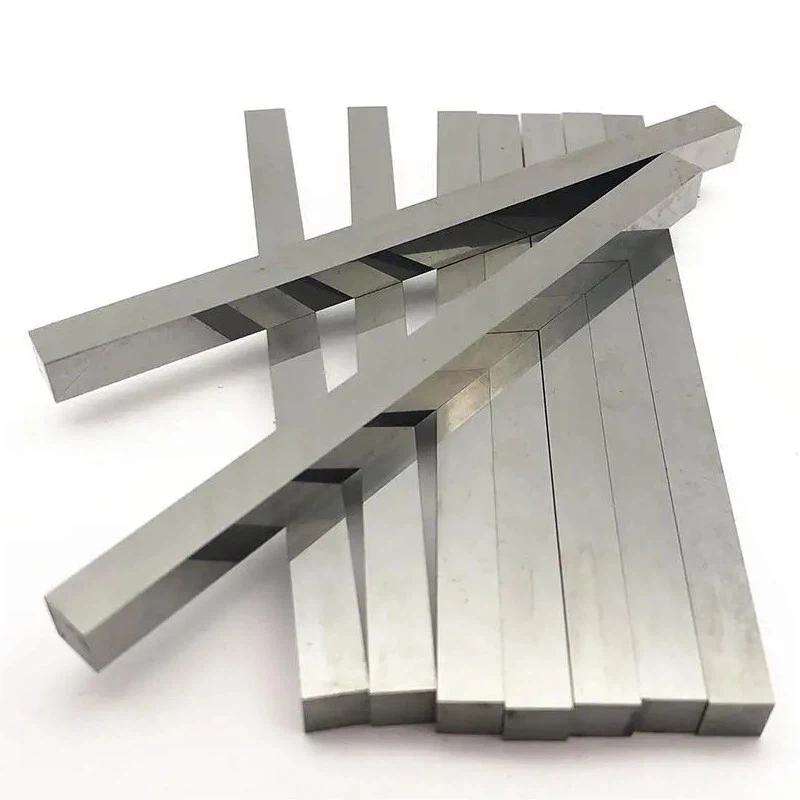

Now, onto low-temperature cutting. Low-temperature cutting, also known as cryogenic cutting, involves using a coolant at very low temperatures, typically liquid nitrogen, to cool the cutting tool and the workpiece during the cutting process. This technique has been gaining popularity in recent years because it offers several advantages over traditional cutting methods.
One of the main benefits of low-temperature cutting on tungsten carbide strips is the improvement in tool life. When cutting at high temperatures, the tungsten carbide strip can experience rapid wear and degradation. The heat generated during the cutting process can cause the material to soften, leading to chipping, flaking, and ultimately, premature tool failure. However, by using a low-temperature coolant, the heat is dissipated quickly, keeping the temperature of the cutting edge within a safe range. This reduces the thermal stress on the strip and helps to maintain its hardness and integrity, resulting in a longer tool life.
For example, in a metal machining operation, a tungsten carbide strip used for cutting steel might last only a few hours under normal cutting conditions. But when low-temperature cutting is employed, the same strip can last several days or even weeks. This not only saves money on tool replacement but also reduces downtime for tool changes, increasing overall productivity.
Another significant effect of low-temperature cutting is the improvement in surface finish. When cutting at high temperatures, the workpiece can experience thermal deformation, which can lead to a rough and uneven surface finish. Additionally, the heat can cause the material to adhere to the cutting edge, resulting in built-up edge (BUE) formation. BUE can cause scratches and other surface defects on the workpiece, reducing its quality.
With low-temperature cutting, the reduced heat input minimizes thermal deformation and prevents BUE formation. The cold coolant also helps to flush away chips and debris from the cutting zone, ensuring a clean and smooth cutting process. As a result, the surface finish of the workpiece is significantly improved, which is crucial in applications where a high-quality finish is required, such as in the production of precision components.
In addition to tool life and surface finish, low-temperature cutting can also enhance the cutting performance of tungsten carbide strips in terms of cutting speed and feed rate. Since the strip remains cooler and more stable during the cutting process, it can withstand higher cutting speeds and feed rates without sacrificing tool life or surface finish. This allows for faster machining times and increased productivity.
However, it's important to note that low-temperature cutting also has some challenges. The equipment required for low-temperature cutting, such as cryogenic cooling systems, can be expensive to purchase and maintain. Additionally, the use of liquid nitrogen requires proper safety precautions, as it is extremely cold and can cause frostbite or other injuries if not handled correctly.
Despite these challenges, the benefits of low-temperature cutting on the performance of tungsten carbide strips are undeniable. If you're in the market for Tungsten Carbide Strips and are looking to improve your cutting operations, I highly recommend considering low-temperature cutting.
At our company, we offer a wide range of Tungsten Carbide Strip For Cutting Tools that are specifically designed to work well with low-temperature cutting techniques. Our strips are made from high-quality tungsten carbide materials and are precision-ground to ensure a sharp and durable cutting edge.
If you're interested in learning more about how low-temperature cutting can benefit your business or if you have any questions about our tungsten carbide strips, please don't hesitate to contact us. We'd be happy to discuss your specific needs and provide you with a customized solution. Whether you're a small workshop or a large manufacturing plant, we have the expertise and products to help you achieve better cutting performance and improve your bottom line.
In conclusion, low-temperature cutting has a profound effect on the performance of tungsten carbide strips. It improves tool life, enhances surface finish, and increases cutting speed and feed rate. By incorporating low-temperature cutting into your cutting operations, you can save money, increase productivity, and produce higher-quality products. So, why not give it a try?
References
- "Cryogenic Machining: A Review" by Y. K. Choudhury and S. El-Baradie
- "Improving Tool Life and Surface Finish in Machining Using Cryogenic Cooling" by A. K. Sahu and S. K. Panda
- "Advances in Cryogenic Machining" by M. P. Armarego and R. H. Brown


