Cobalt: A Small Metal with Big Applications
Overview
Cobalt is a silvery white metal known for its ferromagnetism, ductility, high-temperature resistance, and corrosion resistance. Owing to its excellent physical, chemical, and machining properties, it is widely used in machinery manufacturing, electronics, aerospace, and battery production. Recognized as a vital strategic resource, cobalt is often referred to as "industrial MSG" and "industrial teeth."
Introduction to the Element Cobalt
Cobalt, symbolized as Co, has an atomic number of 27 and an atomic weight of 58.93. It has a density of 8.9 g/cm³, a hardness of 5.6, a melting point of 1495 °C, and a boiling point of 2870 °C. This silvery white metal shares similar hardness, tensile strength, and machinability with iron and nickel. Alloys based on cobalt, or containing cobalt, boast excellent heat resistance, wear resistance, and corrosion resistance, making them indispensable in industrial production. Although trace amounts of cobalt can be found in ores of iron, nickel, copper, as well as in natural waters, soils, and plants, distinct cobalt minerals are extremely rare (only about 0.0023% in the Earth's crust), rendering cobalt a scarce but strategically critical resource.
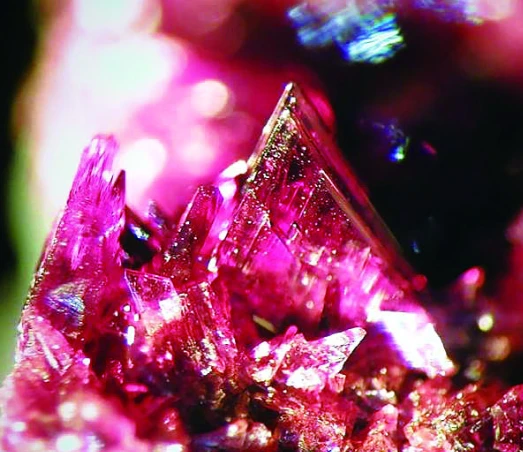
In nature, cobalt mainly exists in three forms:
Distinct Cobalt-Bearing Minerals: Such as cobalt sulfide, fibrous columnar minerals, cobaltite, arsenic cobalt ore, and cobalt bloom-the minerals with the highest cobalt content.
Embedded in Sulfide Structures: Cobalt is often "embedded" in the crystal structures of sulfide minerals like pyrite and magnetic pyrite.
Adsorbed Cobalt Ions: Present as cobalt ions on the surfaces of certain minerals, though the second form is the most common.
Over 100 cobalt-bearing minerals have been identified. Cobalt is typically found as an accessory component in other metal deposits, especially in sandstone-type copper deposits, magmatic copper-nickel deposits, and laterite nickel deposits. In terms of resource reserves, nickel-cobalt occurrences account for 50%, copper-cobalt for 44%, and primary cobalt for only 6%. According to the United States Geological Survey (USGS), global cobalt resource reserves were about 7 million tonnes in 2020. The Democratic Republic of the Congo holds roughly 3.6 million tonnes (around 50% of the global total), followed by Australia with approximately 1.4 million tonnes (about 20%), while China's reserves are about 80,000 tonnes (just 1.12% of the global total).
The Development History of the Cobalt Industry
Germany and Norway were the first countries to produce cobalt, though initially on a small scale. It wasn't until 1874 that New Caledonia began developing cobalt mines, and between 1903 and 1909, Canada significantly ramped up production, increasing global output from 16 tonnes to 1,553 tonnes. After the copper-cobalt deposits in the Katanga Province of the Democratic Republic of the Congo were developed in 1920, that country maintained its position as the world's top cobalt producer, with Zambia ranking second. In 1933, Morocco started exploiting arsenic cobalt ore, becoming the world's third-largest cobalt producer.
In China, cobalt production started relatively late. In 1954, the Shenyang Smelting Plant began producing cobalt from zinc-cobalt slag. The process involved reducing and dissolving the slag to produce cobalt hydroxide (with 30–40% cobalt content), followed by calcination, electric furnace smelting, and electrolytic refining to yield metallic cobalt. In 1958, geologists discovered the Jinchang nickel deposit in Jinchang City, Gansu Province-one of China's three major polymetallic deposits. Predominantly a nickel deposit, it also contains cobalt and copper, with cobalt production accounting for over 70% of the national total, making it a crucial cobalt production base. Although China's cobalt resource reserves are limited, its refined cobalt production constitutes 67% of the global market, with raw materials primarily sourced from cobalt concentrates or intermediate products from countries such as the Democratic Republic of the Congo.

Applications of Cobalt in Modern Society
Cobalt is primarily used in the manufacturing of magnetic materials, superalloys, aerospace components, and battery materials, and it also finds extensive applications in the medical field.
Magnetic Materials:
Magnetic materials are key functional materials in electronics and high-tech manufacturing. Cobalt is one of the metals that can retain its magnetism after being magnetized just once. Its Curie point is as high as 1150 °C (compared to iron's 769 °C), allowing cobalt-containing magnetic materials to maintain stable magnetism under high temperatures. This property makes them ideal for high-performance magnetic applications.