

Why Choose Us
Strong R&D capabilities
The company has more than 20 patents in cemented carbide and deep processing technology, new materials, and new technologies, and has strong research and development capabilities.
Production Market
The whole China market, South Asia, south-eastern Asia, East Asia, North America,South America, Europe, etc countries and regions.
Professional team
We have a professional quality control team that follows the ISO9001:2015 system.
Provide OEM service
We work on OEM orders. Which means size, quantity, design, packing solution, etc will depend on your requests.
Zigong Sansheng Carbide Co., Ltd. is located in the high-tech industrial park of Zigong City, Sichuan Province. It is a professional manufacturer engaged in the research and development, production, product deep processing and domestic and foreign trade sales. The company has strong technical force, advanced production technology and production equipment, and is one of the best suppliers of tungsten series cemented carbide in China.
Related Product

Tungsten carbide strips with different grades are High density, hardness , bending strength and Good wear resistance tungsten carbide strips for tool parts permanent wearing. High standard quality,competitive price.,Carbide strips are used for making hammer for sand making machines, woodworking tools, to cut the plastic products, etc

Tungsten carbide plates that are especially suitable for protecting surfaces against abrasive and erosive wear. The plates are made of tungsten carbide and can be adjusted with different chemical compositions to the requirements of each specific.

Tungsten Carbide Tips For Sandmaking
Material: 100% virgin raw material
Grade No: YG6, YG8, YG11, YG15, YG6X, YG8X, YG11X, YG15X
Usage: For woodworking metalworking and stone cutting tools.

Tungsten carbide strips blanks is a highly efficient and green material, which features qualities of stainless steel: Corrosion resistance,oxidation resistance, wear resistance, bonding proof and acid-base resistance; And ensures its good strength, toughness, bending and stretching, impact resistance.

Tungsten Carbide Strip For Cutting Tools
The main composition of tungsten carbide strips is tungsten carbide powders and cobalt powders. With its wear resistant and corrosion resistant ability, tungsten carbide nowadays is widely used in many areas such as: cutting tools , moulds , oil and automobile industry etc.

Carbide Hammer Tips For Hammer Crusher
Tungsten carbide hammer tips are used to make throwing heads, mainly used in the core components of vertical impact crushers. They are assembled on the hammer head of the crusher by bonding or welding, using the advanced crushing principle of stone to stone.
Tungsten carbide hammer tips are used to make throwing heads, mainly used in the core components of vertical impact crushers. They are assembled on the hammer head of the crusher by bonding or welding, using the advanced crushing principle of stone to stone. Sand making equipment widely used in industries such as mining, cement, metallurgy, and hydro-power engineering.
Benefits of Carbide Hammer Tips for Hammer Crusher
Wear resistance
In industrial settings characterized by harsh operating conditions and abrasive environments, wear resistance is paramount. Carbide hammer tips for hammer crusher excel in this regard, exhibiting unparalleled resistance to abrasion, erosion, and corrosion. As a result, they maintain their structural integrity and performance over prolonged periods, minimizing downtime and maintenance costs.
Exceptional strength-to-weight ratio
Despite their formidable hardness, carbide hammer tips for hammer crusher possess a remarkable strength-to-weight ratio, surpassing that of traditional metals. This unique combination of strength and lightness makes them well-suited for applications where weight reduction is desired without compromising on structural integrity.
High temperature resistance
Industrial processes often entail exposure to extreme temperatures, necessitating materials capable of withstanding thermal stress. Carbide hammer tips for hammer crusher, characterized by their high melting point and thermal stability, exhibit exceptional resistance to heat, ensuring reliable performance even in the harshest operating conditions.
Precision machining capabilities
Carbide hammer tips for hammer crusher lend themselves to precision machining with unparalleled ease and accuracy. Their inherent hardness allows for intricate shaping and machining, enabling the creation of intricate components and parts with utmost precision and consistency.
Versatility across industries
From cutting tools and wear parts to dies and molds, carbide hammer tips for hammer crusher find a myriad of applications across diverse industries. Whether in automotive manufacturing, aerospace engineering, or oil and gas exploration, these plates play a pivotal role in enhancing efficiency, productivity, and reliability across various industrial processes.
Cost-effectiveness
While carbide hammer tips for hammer crusher may entail a higher initial investment compared to conventional materials, their longevity and durability translate to significant cost savings in the long run. By minimizing downtime, reducing maintenance costs, and extending the lifespan of industrial components, these plates offer a compelling return on investment for businesses seeking to optimize operational efficiency.
Application of Carbide Hammer Tips for Hammer Crusher
Cutting and milling tools
Carbide hammer tips for hammer crusher serve as the backbone of cutting and milling tools used in metalworking, woodworking, and machining applications. Their exceptional hardness and wear resistance make them indispensable for achieving precise cuts, high-quality finishes, and extended tool life.
Wear parts and components
In industries where abrasion and wear are prevalent, such as mining, construction, and manufacturing, carbide hammer tips for hammer crusher find extensive use in wear parts and components. From drill bits and cutting edges to crusher liners and conveyor belts, these plates ensure optimal performance and longevity in demanding environments.
Die and mold manufacturing
The hardness and precision machinability of carbide hammer tips for hammer crusher make them indispensable for die and mold manufacturing in the plastics, automotive, and electronics industries. Whether for injection molding, extrusion, or stamping, these plates facilitate the production of complex and high-precision components with exceptional repeatability and accuracy.
Oil and gas exploration
In the oil and gas industry, where drilling operations are conducted in challenging geological formations, carbide hammer tips for hammer crusher play a crucial role in drill bits and downhole tools. Their superior hardness and wear resistance enable efficient drilling through rock, shale, and other formations, thereby enhancing drilling performance and productivity.
Structure of Carbide Hammer Tips for Hammer Crusher
1.There is a hexagonal form of tungsten carbide as well as a cubic high-temperature form of tungsten carbide with a rock salt structure.
2.He hexagonal structure is composed of a simple hexagonal lattice of metal atoms in layers that lie directly over one another, therefore not tightly packed, with carbon atoms occupying half the interstices, giving both tungsten and carbon a conventional trigonal prismatic 6 coordination.
3.The tungsten carbon link length is 220 pm, the minimum separation between tungsten atoms in neighboring layers is 284 pm, and the bond lengths between tungsten atoms in a hexagonally packed layer are 291 pm.
4.The length of the tungsten-carbon link is therefore equal to the length of a single bond in W(CH3)6 (218 pm), where tungsten is highly twisted, trigonal, and prismatic.

How to Choose Carbide Hammer Tips for Hammer Crusher
Application requirements
The first step in choosing the ideal size and tolerance for carbide hammer tips for hammer crusher is to carefully assess the specific requirements of the application. Consider factors such as the type of workpiece or component being machined, the level of precision and accuracy required, and the environmental conditions in which the pins will be used. For example, applications that involve high-speed machining, heavy loads, or abrasive materials may require carbide hammer tips for hammer crusher with tighter tolerances and greater dimensional stability to ensure reliable performance and longevity.
Material properties
The material properties of the workpiece or component being machined also play a crucial role in determining the size and tolerance of carbide hammer tips for hammer crusher. Different materials have varying hardness, thermal expansion coefficients, and surface finishes, which can affect the fit and alignment of the pins. For example, softer materials may require carbide hammer tips for hammer crusher with tighter tolerances to prevent excessive deflection or deformation during machining, while harder materials may tolerate looser tolerances without sacrificing accuracy.
Machining capabilities
Another important consideration when choosing the size and tolerance for carbide hammer tips for hammer crusher is the machining capabilities of your facility or supplier. Carbide hammer tips for hammer crusher are typically manufactured using precision grinding or edm (electrical discharge machining) processes, which can achieve tight tolerances and fine surface finishes. However, the level of precision and complexity achievable may vary depending on the equipment, expertise, and resources available. Collaborating with a reputable supplier who specializes in carbide rods and precision machining can help ensure that your flat pins are manufactured to the required specifications with consistency and accuracy.
Fit and assembly requirements
The fit and assembly requirements of the application also influence the choice of size and tolerance for carbide hammer tips for hammer crusher. Consider factors such as the clearance and interference allowances between mating components, the desired level of preload or clamping force, and the need for ease of assembly and disassembly. For press-fit or interference-fit applications, tighter tolerances may be required to achieve a secure and stable connection between the pins and mating surfaces, while clearance-fit applications may tolerate looser tolerances to facilitate assembly and adjustment.
The Sintering Process:Sintering Carbide Hammer Tips For Hammer Crusher typically involves four primary stages: powder preparation, blending, compacting, and sintering. In the first stage, the tungsten and carbon powders are prepared to the required size and purity, which can affect the properties of the final product. In the blending stage, the powders are mixed in a predetermined ratio to form a homogeneous mixture. The compacting stage involves compressing the blended powders into a desired shape using a hydraulic press, which can produce parts with complex geometries. The final stage is sintering, which involves heating the compacted powder mixture in a vacuum or controlled atmosphere furnace to a temperature that is sufficient to initiate the chemical reaction between the tungsten and carbon powders, resulting in a denser and more homogeneous structure.
How to Maintain Carbide Hammer Tips for Hammer Crusher
Thoroughly clean the hammer crusher carbide hammer head after each use to remove buildup of resin, sap, or other debris. Use a soft brush or compressed air to remove stubborn residue, and avoid using harsh chemicals or abrasive cleaners that can damage carbide materials.
Store hammer crusher carbide hammer heads in a clean, dry environment away from moisture, moisture and extreme temperatures. Use a protective sheath or sheath to prevent damage and keep the blade sharp and free of nicks or dents.
It is recommended to use lubricants when using hammer crusher carbide hammer heads. Lubricants help reduce heat that can damage the cutterhead. Heat causes the metal to expand, causing it to crack or chip. Lubricants also help extend the life of your files because they reduce wear. Be sure to follow the manufacturer's recommendations when using lubricants, as using the wrong type of lubricant can also damage burrs.
Regularly inspect the hammer crusher carbide hammer heads for signs of damage, wear or failure. Inspect the saw tip for chips or cracks, loose or missing fasteners, and any other anomalies that may affect performance or safety. Replace or repair damaged tools promptly to prevent further damage and ensure safe operation.
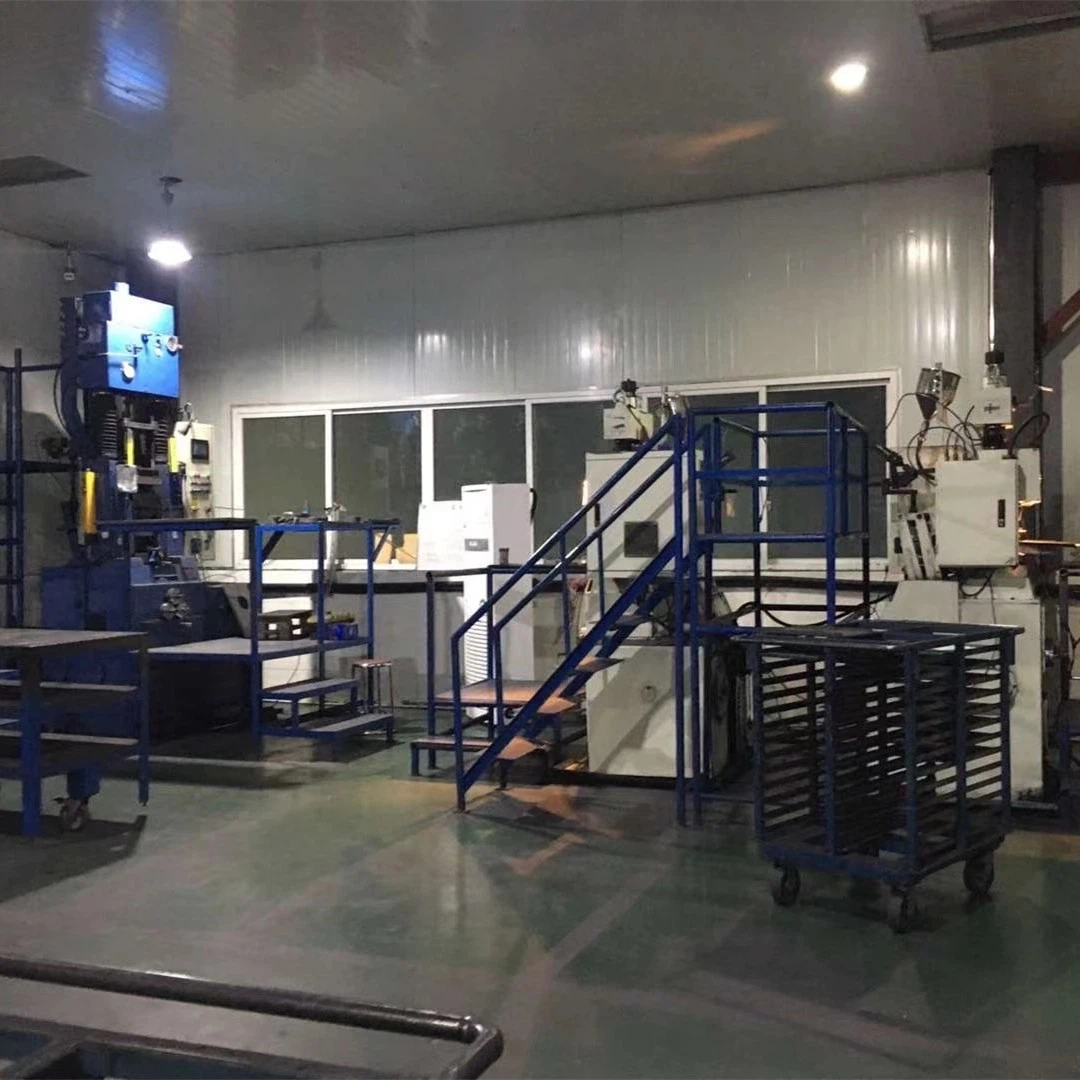
Factory pictures


FAQ
Hot Tags: carbide hammer tips for hammer crusher, China carbide hammer tips for hammer crusher manufacturers, suppliers, factory, carbide insert brazed tip, tungsten carbide button for percussion drilling, tungsten carbide button impact resistance, tungsten carbide button for sandstone drilling, brazed tungsten carbide strong tip, cutting tungsten carbide brazed tip


