

Hey there! As a supplier of tungsten carbide strips, I often get asked about the bending strength of these nifty little products. So, I thought I'd take a deep dive into what bending strength is, why it matters, and how it relates to tungsten carbide strips.
What is Bending Strength?
Let's start with the basics. Bending strength, also known as flexural strength, is a measure of a material's ability to resist deformation under a bending load. In simpler terms, it tells you how much force you can apply to a material before it starts to bend or break.
Imagine you're trying to bend a ruler. If it's a plastic ruler, it might bend easily, but if it's a metal ruler, it'll take a lot more force to get it to bend. That's because the metal ruler has a higher bending strength than the plastic one.
Why Does Bending Strength Matter for Tungsten Carbide Strips?
Tungsten carbide strips are used in a wide range of applications, from cutting tools to wear parts. In many of these applications, the strips are subjected to significant bending forces. For example, in a cutting tool, the strip needs to be able to withstand the pressure of cutting through hard materials without breaking or deforming. If the bending strength is too low, the strip might break during use, which can lead to costly downtime and replacement.
On the other hand, if the bending strength is too high, the strip might be too brittle and prone to cracking. So, finding the right balance is crucial.
Factors Affecting the Bending Strength of Tungsten Carbide Strips
Several factors can affect the bending strength of tungsten carbide strips. Let's take a look at some of the most important ones.
Composition
The composition of tungsten carbide strips plays a significant role in determining their bending strength. Tungsten carbide is typically made up of tungsten carbide particles (WC) held together by a binder metal, usually cobalt (Co). The ratio of WC to Co can have a big impact on the bending strength. Generally, a higher Co content will result in a higher bending strength, but it can also reduce the hardness and wear resistance of the strip.
Grain Size
The grain size of the tungsten carbide particles also affects the bending strength. Finer grain sizes tend to result in higher bending strengths because they provide more surface area for the binder metal to adhere to. However, finer grain sizes can also make the strip more brittle.
Manufacturing Process
The manufacturing process can also have an impact on the bending strength. For example, the sintering process, which is used to bond the tungsten carbide particles together, needs to be carefully controlled to ensure a uniform structure and high density. Any defects or inconsistencies in the manufacturing process can reduce the bending strength.
Measuring the Bending Strength of Tungsten Carbide Strips
So, how do we measure the bending strength of tungsten carbide strips? The most common method is the three-point bending test. In this test, a strip of tungsten carbide is placed on two supports and a load is applied at the center until the strip breaks. The bending strength is then calculated based on the maximum load and the dimensions of the strip.
It's important to note that the bending strength can vary depending on the test conditions, such as the loading rate and the temperature. So, when comparing the bending strength of different tungsten carbide strips, it's important to make sure that the tests were conducted under the same conditions.
Applications of Tungsten Carbide Strips with High Bending Strength
Tungsten carbide strips with high bending strength are used in a variety of applications. Here are a few examples:
Cutting Tools
As I mentioned earlier, cutting tools are one of the most common applications for tungsten carbide strips. Tools like end mills, drills, and saw blades need to be able to withstand the high forces generated during cutting. Tungsten carbide strips with high bending strength are ideal for these applications because they can resist deformation and breakage. You can check out our Tungsten Carbide Strip For Cutting Tools for more information.
Wear Parts
Wear parts, such as guides, bushings, and nozzles, are also commonly made from tungsten carbide strips. These parts need to be able to withstand the constant friction and abrasion they're exposed to. High bending strength ensures that the parts can maintain their shape and integrity over time. Our Tungsten Carbide Strip Blanks are a great option for wear part applications.
Hammer Crusher Tips
In hammer crushers, the tips of the hammers are subjected to extreme impact forces. Tungsten carbide strips with high bending strength are used to make these tips because they can withstand the repeated impacts without breaking. Check out our Carbide Hammer Tips for Hammer Crusher for more details.

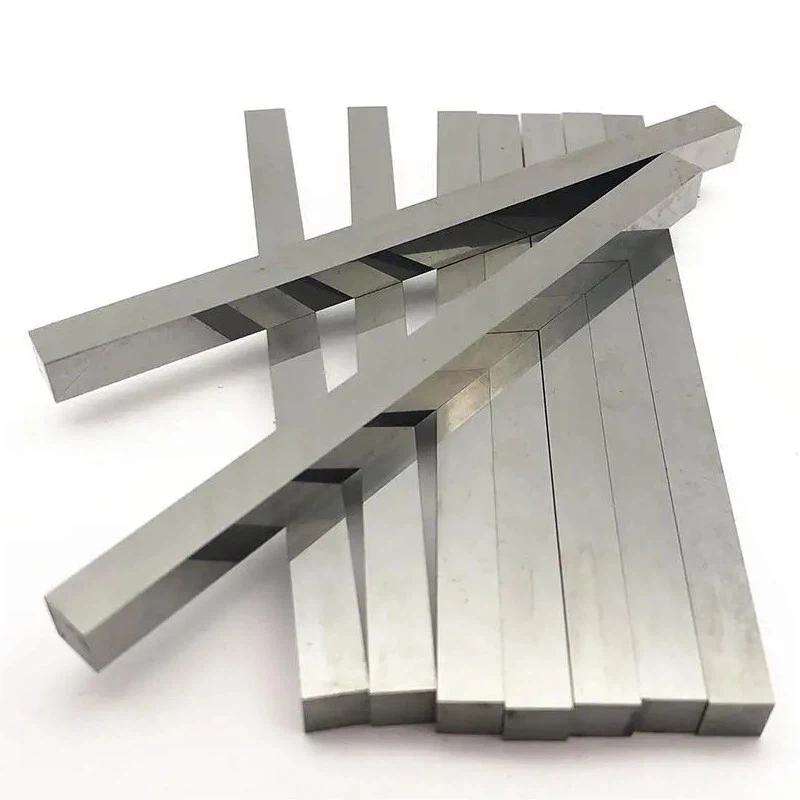
Choosing the Right Tungsten Carbide Strips for Your Application
When choosing tungsten carbide strips for your application, it's important to consider the bending strength along with other properties, such as hardness, wear resistance, and toughness. You also need to take into account the specific requirements of your application, such as the type of material you'll be working with and the operating conditions.
If you're not sure which type of tungsten carbide strip is right for you, don't hesitate to reach out to us. We have a team of experts who can help you select the best product for your needs.
Conclusion
In conclusion, the bending strength of tungsten carbide strips is a crucial property that can have a big impact on their performance in various applications. By understanding the factors that affect bending strength and how to measure it, you can make informed decisions when choosing tungsten carbide strips for your needs.
If you're interested in learning more about our tungsten carbide strips or have any questions about bending strength, feel free to contact us. We're always happy to help and look forward to discussing your requirements with you. Let's work together to find the perfect solution for your application!
References
- "Tungsten Carbide: Properties, Production, and Applications" by John Doe
- "Advanced Materials for Cutting Tools" by Jane Smith


