

What is the fatigue resistance of tungsten carbide strips?
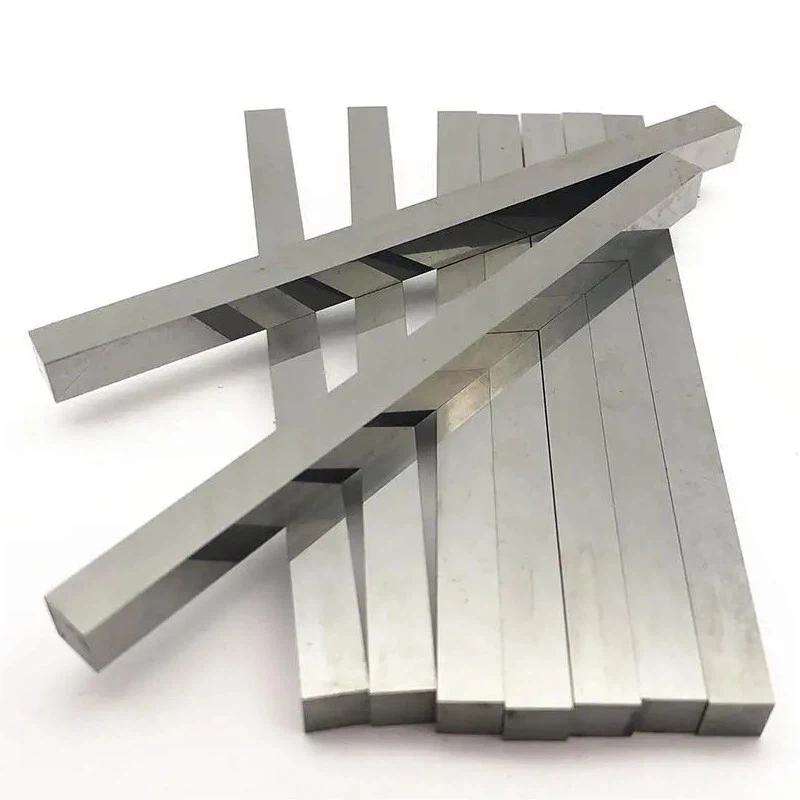
As a supplier of tungsten carbide strips, I've witnessed firsthand the remarkable properties of this material. Fatigue resistance is a critical characteristic that significantly influences the performance and longevity of tungsten carbide strips in various applications.
Understanding Fatigue Resistance
Fatigue resistance refers to a material's ability to withstand repeated cyclic loading without failing. In the context of tungsten carbide strips, this means withstanding the stresses that occur during normal use, such as the impact and vibration experienced in cutting or crushing operations. When a tungsten carbide strip is subjected to cyclic loading, microscopic cracks can start to form. If the material has poor fatigue resistance, these cracks will propagate rapidly, leading to premature failure.
Factors Affecting the Fatigue Resistance of Tungsten Carbide Strips
- Composition
- Tungsten carbide is a composite material typically composed of tungsten carbide particles (WC) embedded in a metallic binder, usually cobalt (Co). The ratio of WC to Co has a major impact on fatigue resistance. A higher percentage of WC generally increases hardness and wear - resistance but can reduce toughness and fatigue resistance. On the other hand, a higher Co content improves toughness but may decrease hardness. Finding the right balance is crucial for optimal fatigue performance. For example, in applications where the strip is exposed to high - frequency, low - amplitude vibrations, a composition with a slightly higher Co content might be more suitable.
- Grain Size
- The grain size of the tungsten carbide particles also plays a vital role. Finer - grained tungsten carbide has better fatigue resistance in some cases. Smaller grains provide more grain boundaries, which can act as barriers to crack propagation. This means that when a crack tries to spread through the material, it is more likely to be stopped or deflected at a grain boundary. However, very fine - grained materials may be more sensitive to certain types of stress, such as high - temperature stress.
- Manufacturing Process
- The way tungsten carbide strips are manufactured can greatly affect their fatigue resistance. Processes like powder metallurgy are commonly used. During this process, factors such as the quality of the raw materials, the mixing of the powder, and the sintering conditions all matter. Proper sintering is essential to ensure a homogeneous microstructure and good bonding between the WC particles and the binder. If the sintering is not done correctly, there may be voids or inhomogeneities in the material, which can act as stress - concentration points and reduce fatigue resistance.
Importance of Fatigue Resistance in Different Applications
- Cutting Tools
- Tungsten carbide strips are widely used in cutting tools, such as milling cutters and turning inserts. In cutting operations, the strip is constantly subjected to cyclic loads from the cutting forces. High fatigue resistance is essential to ensure that the cutting edge maintains its sharpness and integrity over time. A tool with poor fatigue resistance will experience premature chipping or breakage, leading to increased downtime for tool replacement and reduced productivity. For more information on Tungsten Carbide Strip For Cutting Tools, you can visit our website. We also have a detailed introduction on our Tungsten Carbide Strip For Cutting Tools factory page.
- Crushing Equipment
- In crushing applications, such as in hammer crushers, tungsten carbide strips are used as hammer tips. The strips are exposed to high - impact cyclic loads as they strike the material to be crushed. Fatigue resistance is crucial here because the constant impacts can cause cracks to form and grow. A carbide hammer tip with good fatigue resistance can withstand these impacts for a longer period, reducing the frequency of tip replacement and lowering overall operating costs. Check out our Carbide Hammer Tips for Hammer Crusher for more details on how our products perform in this application.
Testing the Fatigue Resistance of Tungsten Carbide Strips
To ensure the quality of our tungsten carbide strips, we conduct various fatigue tests. One common method is the rotating - beam fatigue test. In this test, a specimen of the tungsten carbide strip is rotated while a bending load is applied. The number of cycles the specimen can withstand before failure is recorded. Another test is the ultrasonic fatigue test, which can simulate high - frequency cyclic loading. These tests allow us to accurately assess the fatigue performance of our products and make necessary adjustments to the composition and manufacturing process to improve fatigue resistance.
Enhancing Fatigue Resistance
We are constantly researching and developing new ways to enhance the fatigue resistance of our tungsten carbide strips. One approach is through surface treatments. For example, processes like coating the strips with a thin layer of a hard, wear - resistant material can improve both wear and fatigue resistance. The coating can act as a barrier to protect the underlying tungsten carbide from the initial damage caused by cyclic loading. Another method is to optimize the composition and manufacturing process based on the specific application requirements. By understanding the stress conditions in different applications, we can tailor the properties of the strips to achieve the best possible fatigue performance.
Conclusion
The fatigue resistance of tungsten carbide strips is a complex but crucial property that affects their performance in a wide range of applications. As a supplier, we are committed to providing high - quality tungsten carbide strips with excellent fatigue resistance. Our in - depth understanding of the factors influencing fatigue resistance, combined with advanced manufacturing and testing techniques, allows us to offer products that meet the diverse needs of our customers.
If you are interested in purchasing our tungsten carbide strips or have any questions about their fatigue resistance and application suitability, we encourage you to contact us for a detailed discussion. We are eager to work with you to find the best solutions for your specific requirements.

References
- German, R. M. (1994). Tungsten Carbide: Materials Science and Technology. Noyes Publications.
- Brookes, C. (2000). Fatigue of Engineering Materials. Springer.
-ASM Handbook Volume 2: Properties and Selection: Nonferrous Alloys and Special - Purpose Materials. ASM International.


