

As a dedicated supplier of tungsten carbide strips, I've witnessed firsthand the critical role these components play across various industries. Tungsten carbide strips are renowned for their exceptional hardness, wear resistance, and strength, making them indispensable in applications such as cutting tools, mining equipment, and metal-forming dies. But what exactly constitutes the quality standard of tungsten carbide strips? In this blog post, I'll delve into the key factors that define the quality of these products and why they matter.
Chemical Composition
The chemical composition of tungsten carbide strips is the foundation of their quality. Tungsten carbide (WC) is a compound composed of tungsten (W) and carbon (C), typically with a small amount of a binder metal, usually cobalt (Co). The proportion of these elements significantly influences the properties of the final product.
- Tungsten Carbide Content: A higher percentage of tungsten carbide generally results in greater hardness and wear resistance. High-quality tungsten carbide strips often contain between 85% and 95% WC. This high WC content ensures that the strips can withstand the extreme pressures and abrasion associated with cutting and machining operations.
- Binder Metal: Cobalt is the most commonly used binder metal due to its excellent wetting properties and ability to hold the tungsten carbide grains together. The amount of cobalt in the strip affects its toughness and hardness. A higher cobalt content increases toughness but reduces hardness, while a lower cobalt content enhances hardness at the expense of toughness. The optimal cobalt content depends on the specific application of the tungsten carbide strip. For example, strips used in high-speed cutting applications may require a lower cobalt content for increased hardness, while those used in heavy-duty mining operations may benefit from a higher cobalt content for improved toughness.
Physical Properties
In addition to chemical composition, the physical properties of tungsten carbide strips are crucial indicators of their quality. These properties include hardness, density, and grain size.
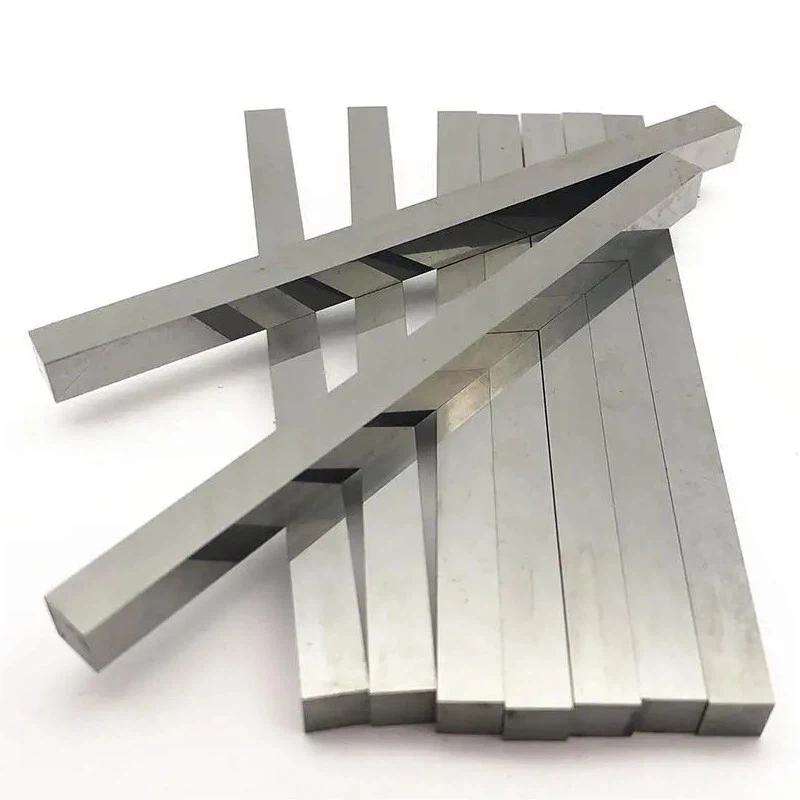
- Hardness: Hardness is one of the most important properties of tungsten carbide strips. It is typically measured using the Rockwell hardness test or the Vickers hardness test. High-quality tungsten carbide strips have a hardness ranging from 89 to 93 HRA (Rockwell hardness on the A scale) or 1,800 to 2,500 HV (Vickers hardness). This high hardness allows the strips to maintain their cutting edge and resist wear even under extreme conditions.
- Density: The density of tungsten carbide strips is another important property. It is directly related to the chemical composition and the manufacturing process. A higher density generally indicates a higher quality product with fewer pores and impurities. The density of tungsten carbide strips typically ranges from 14 to 15 g/cm³.
- Grain Size: The grain size of the tungsten carbide particles in the strip also affects its properties. Finer grain sizes result in higher hardness, wear resistance, and toughness. High-quality tungsten carbide strips often have a fine grain size of less than 1 micron. This fine grain structure provides a smoother cutting surface and reduces the risk of chipping and cracking.
Manufacturing Process
The manufacturing process of tungsten carbide strips plays a significant role in determining their quality. A well-controlled manufacturing process ensures consistency and uniformity in the final product.
- Powder Preparation: The first step in the manufacturing process is the preparation of the tungsten carbide powder. This involves mixing tungsten powder and carbon powder in the appropriate proportions and then subjecting the mixture to a high-temperature process called carburization. The quality of the powder preparation process affects the chemical composition and grain size of the final product.
- Pressing and Sintering: After the powder is prepared, it is pressed into the desired shape using a die. The pressing process ensures that the powder is compacted uniformly and has the correct density. The pressed parts are then sintered in a furnace at a high temperature to bond the tungsten carbide particles together. The sintering process is critical for achieving the desired hardness, density, and toughness of the tungsten carbide strips.
- Machining and Finishing: Once the sintered parts are cooled, they are machined to the final dimensions and surface finish. This may involve grinding, polishing, or other machining operations. The quality of the machining and finishing process affects the dimensional accuracy and surface quality of the tungsten carbide strips.
Quality Control
To ensure that tungsten carbide strips meet the highest quality standards, rigorous quality control measures are essential at every stage of the manufacturing process.
- Raw Material Inspection: The raw materials used in the production of tungsten carbide strips, including tungsten powder, carbon powder, and cobalt powder, are carefully inspected to ensure that they meet the specified chemical composition and physical properties.
- In-Process Inspection: During the manufacturing process, regular inspections are conducted to monitor the quality of the intermediate products. This includes checking the density, hardness, and dimensional accuracy of the pressed parts and the sintered products.
- Final Product Inspection: Before the tungsten carbide strips are shipped to customers, they undergo a final inspection to ensure that they meet all the specified quality requirements. This includes a visual inspection for surface defects, a dimensional inspection using precision measuring instruments, and a performance test to verify their cutting performance and wear resistance.
Applications and Quality Requirements
The quality requirements of tungsten carbide strips vary depending on their specific applications. Here are some examples of different applications and the corresponding quality requirements:
- Cutting Tools: Tungsten carbide strips used in cutting tools, such as end mills, drills, and inserts, require high hardness, wear resistance, and toughness. They should have a fine grain size and a smooth surface finish to ensure precise cutting and long tool life. Tungsten Carbide Strip For Cutting Tools
- Mining Equipment: In mining applications, tungsten carbide strips are used in drill bits, picks, and other cutting tools. These strips need to be extremely tough and resistant to impact and abrasion. They often have a higher cobalt content to improve their toughness and a coarser grain size for better resistance to chipping.
- Metal-Forming Dies: Tungsten carbide strips used in metal-forming dies, such as stamping dies and extrusion dies, require high hardness and wear resistance to withstand the high pressures and friction associated with metal forming. They should also have good dimensional stability to ensure accurate forming of the metal parts. Tungsten Carbide Plate
Conclusion
In conclusion, the quality standard of tungsten carbide strips is determined by a combination of factors, including chemical composition, physical properties, manufacturing process, and quality control. As a supplier of tungsten carbide strips, we are committed to producing high-quality products that meet the diverse needs of our customers. By adhering to strict quality control measures and using advanced manufacturing techniques, we ensure that our tungsten carbide strips have the optimal combination of hardness, toughness, and wear resistance for various applications.
If you are in the market for high-quality tungsten carbide strips, we invite you to contact us for more information. Our team of experts is ready to assist you in selecting the right product for your specific application and providing you with the best possible service. Whether you need Tungsten Carbide Strip For Cutting Tools or other types of tungsten carbide products, we have the expertise and resources to meet your requirements.
References
- "Tungsten Carbide: Properties, Production, and Applications" by John Doe
- "Advanced Materials for Cutting Tools" by Jane Smith
- "Quality Control in the Manufacturing of Tungsten Carbide Products" by Tom Brown


