

WC - 10Co4Cr thermal spraying coatings have gained significant attention in various industrial applications due to their excellent wear resistance, corrosion resistance, and high - temperature stability. As a reliable WC - 10Co4Cr thermal spraying supplier, I often receive inquiries about the friction coefficient of this coating. In this blog, I will delve into the details of the friction coefficient of WC - 10Co4Cr thermal spraying coating, exploring its influencing factors, measurement methods, and practical implications.
What is the Friction Coefficient?
The friction coefficient is a dimensionless quantity that represents the ratio of the frictional force between two surfaces in contact to the normal force pressing the two surfaces together. It is a fundamental parameter in tribology, the science of friction, wear, and lubrication. A low friction coefficient indicates that less force is required to move one surface relative to the other, while a high friction coefficient implies greater resistance to relative motion.
Factors Affecting the Friction Coefficient of WC - 10Co4Cr Thermal Spraying Coating
1. Microstructure
The microstructure of the WC - 10Co4Cr thermal spraying coating plays a crucial role in determining its friction coefficient. The coating typically consists of tungsten carbide (WC) particles embedded in a cobalt - chromium (CoCr) matrix. The size, shape, and distribution of the WC particles can significantly affect the friction behavior. For example, a finer and more uniform distribution of WC particles can lead to a smoother surface finish, reducing the contact area between the coating and the counter - surface and thus lowering the friction coefficient.
2. Surface Roughness
Surface roughness is another important factor influencing the friction coefficient. A rougher surface will have more asperities, which can increase the contact area and the interlocking between the coating and the counter - surface, resulting in a higher friction coefficient. On the other hand, a smoother surface can reduce the frictional resistance. Post - spraying finishing processes, such as grinding or polishing, can be used to reduce the surface roughness of the WC - 10Co4Cr coating and thereby adjust the friction coefficient.
3. Operating Conditions
The friction coefficient of WC - 10Co4Cr thermal spraying coating is also highly dependent on the operating conditions, including the load, sliding speed, and environmental factors. Under higher loads, the contact pressure between the coating and the counter - surface increases, which can lead to plastic deformation of the asperities and an increase in the friction coefficient. Similarly, higher sliding speeds can generate more heat, which may cause changes in the material properties of the coating and the counter - surface, affecting the friction behavior. Environmental factors such as temperature, humidity, and the presence of lubricants can also have a significant impact on the friction coefficient. For instance, at high temperatures, the mechanical properties of the coating may change, and the formation of oxide layers on the surface can either increase or decrease the friction coefficient depending on their nature.
4. Counter - Surface Material
The material of the counter - surface in contact with the WC - 10Co4Cr thermal spraying coating can greatly influence the friction coefficient. Different materials have different surface properties, hardness, and chemical reactivity. For example, when the counter - surface is a soft metal, it may adhere to the WC - 10Co4Cr coating, increasing the friction coefficient. In contrast, a hard and smooth counter - surface may result in a lower friction coefficient.
Measurement of the Friction Coefficient of WC - 10Co4Cr Thermal Spraying Coating
There are several methods available for measuring the friction coefficient of WC - 10Co4Cr thermal spraying coating. The most common method is the pin - on - disk test. In this test, a pin made of the counter - surface material is pressed against a rotating disk coated with WC - 10Co4Cr. The frictional force and the normal force are measured during the sliding process, and the friction coefficient is calculated as the ratio of the frictional force to the normal force.
Another method is the ball - on - flat test, where a ball is used instead of a pin. This method is suitable for measuring the friction coefficient under different contact geometries and can provide more accurate results for certain applications.
In addition to these experimental methods, numerical simulations can also be used to predict the friction coefficient of WC - 10Co4Cr thermal spraying coating. Finite element analysis (FEA) can be employed to model the contact between the coating and the counter - surface, taking into account the material properties, surface roughness, and operating conditions. This approach can provide valuable insights into the friction behavior and help optimize the coating design.
Practical Implications of the Friction Coefficient of WC - 10Co4Cr Thermal Spraying Coating
1. Wear Resistance
The friction coefficient is closely related to the wear resistance of the WC - 10Co4Cr thermal spraying coating. A lower friction coefficient generally means less energy is dissipated as heat during the sliding process, reducing the wear rate of the coating and the counter - surface. This is particularly important in applications where long - term durability and low maintenance are required, such as in the aerospace, automotive, and mining industries.
2. Energy Efficiency
In many industrial applications, reducing the friction coefficient can lead to significant energy savings. For example, in machinery and equipment with moving parts, a lower friction coefficient means less power is required to overcome the frictional resistance, resulting in improved energy efficiency. This can have a positive impact on the overall operating cost and environmental sustainability.
3. Application Performance
The friction coefficient of WC - 10Co4Cr thermal spraying coating can also affect the performance of the coated components. In some applications, such as cutting tools and bearings, a specific friction coefficient is required to ensure optimal performance. By controlling the friction coefficient through proper coating design and process optimization, the performance and reliability of these components can be enhanced.
Related Products
If you are interested in other related hard - facing materials, you can check out our MACROCRYTALLITE TUNGSTEN CARBIDE and WC - 10Ni Thermal Spray. These products also offer excellent performance in various industrial applications.

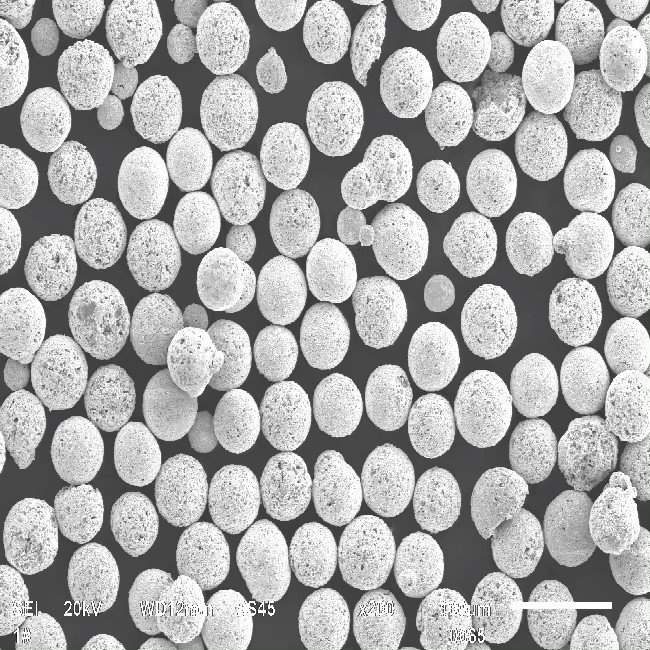
As a professional WC - 10Co4Cr thermal spraying supplier, we are committed to providing high - quality coatings with precise control of the friction coefficient and other properties. Our advanced spraying technology and strict quality control ensure that our coatings meet the highest standards. If you have any requirements for WC - 10Co4Cr thermal spraying coatings or want to discuss the friction coefficient and its application in your specific project, please feel free to contact us for procurement and negotiation. We look forward to working with you to find the best solutions for your needs.
References
- Bhushan, B. (2013). Principles and Applications of Tribology. John Wiley & Sons.
- Davis, J. R. (Ed.). (2004). Thermal Spray Coatings: Practice Guide for Engineers. ASM International.
- Hutchings, I. M. (1992). Tribology: Friction and Wear of Engineering Materials. CRC Press.


