Hey there! As a supplier of tungsten carbide plates, I often get asked about the hardness testing methods for these bad boys. Tungsten carbide plates are super tough and widely used in various industries, from mining to manufacturing. So, getting an accurate read on their hardness is crucial. Let's dive into the different ways we test the hardness of tungsten carbide plates.
Rockwell Hardness Testing
One of the most common methods is Rockwell hardness testing. It's a pretty straightforward process. We use a machine that presses a hard indenter, usually a diamond cone or a hardened steel ball, into the surface of the tungsten carbide plate with a specific load. The depth of the indentation is then measured, and based on that measurement, we can determine the Rockwell hardness number.
The great thing about Rockwell testing is that it's quick and relatively easy to perform. It gives us a good general idea of the plate's hardness. However, it does have some limitations. Since it only measures a small area, it might not be representative of the entire plate, especially if there are any inhomogeneities in the material.
Vickers Hardness Testing
Another popular method is Vickers hardness testing. In this case, we use a square-based pyramid-shaped indenter made of diamond. We apply a load to the indenter, which creates an indentation on the surface of the tungsten carbide plate. After that, we measure the diagonal lengths of the indentation under a microscope.
The Vickers hardness number is calculated based on the load applied and the size of the indentation. This method is more accurate than Rockwell testing because it measures a larger area and is less affected by surface irregularities. It's also great for testing the hardness of thin layers or small samples. But it does take a bit more time and requires a microscope for accurate measurement.
Knoop Hardness Testing
Knoop hardness testing is similar to Vickers testing, but it uses a rhombic-based pyramid-shaped indenter. The advantage of Knoop testing is that it creates a long, narrow indentation, which is useful for testing materials with a layered structure or for measuring the hardness of small areas.
Just like Vickers testing, we measure the length of the long diagonal of the indentation under a microscope and calculate the Knoop hardness number. This method is often used when we need to test the hardness of coatings or thin films on the surface of the tungsten carbide plate.

Brinell Hardness Testing
Brinell hardness testing is one of the oldest methods. We use a hardened steel or carbide ball as the indenter and apply a large load to it. The resulting indentation is measured, and the Brinell hardness number is calculated.
This method is good for testing the hardness of large, thick samples. However, it can be a bit destructive because it creates a relatively large indentation on the surface of the plate. It's also not very suitable for testing hard materials like tungsten carbide because the ball indenter might deform under the high load.
Impact of Hardness on Tungsten Carbide Plate Performance
Now, you might be wondering why we even bother testing the hardness of tungsten carbide plates. Well, hardness plays a crucial role in determining the performance of these plates. A harder plate is more resistant to wear, abrasion, and deformation. This means it can last longer in harsh environments and perform better under heavy loads.
For example, in mining applications, tungsten carbide plates with high hardness are used in drill bits and cutting tools. They can withstand the extreme forces and abrasion caused by rock and ore, ensuring efficient and reliable operation. In manufacturing, hard tungsten carbide plates are used in dies and molds to produce high-quality products with precise dimensions.
Choosing the Right Hardness Testing Method
When it comes to choosing the right hardness testing method for tungsten carbide plates, there are a few factors to consider. First, we need to think about the size and shape of the plate. If it's a small or thin plate, Vickers or Knoop testing might be more appropriate. For larger, thicker plates, Rockwell or Brinell testing could be a better choice.
We also need to consider the accuracy required. If we need a very precise measurement, Vickers or Knoop testing is usually the way to go. However, if a general idea of the hardness is sufficient, Rockwell testing can be a quicker and more cost-effective option.
Our Range of Tungsten Carbide Products
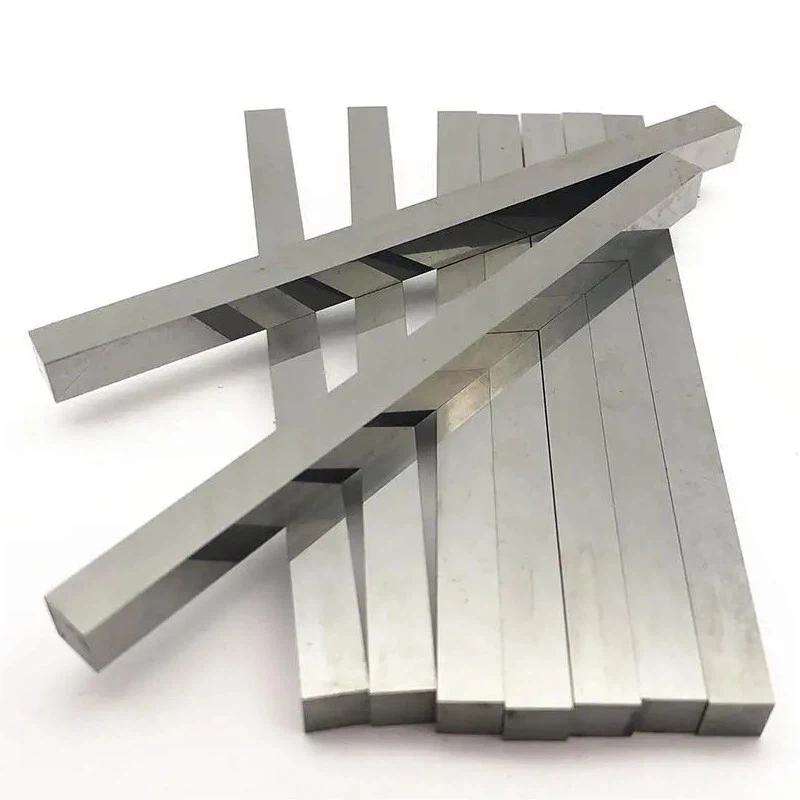
As a tungsten carbide plate supplier, we offer a wide range of products to meet different customer needs. Our Tungsten Carbide Strips are known for their high hardness and excellent wear resistance. They are widely used in cutting tools, dies, and other industrial applications.
We also have Carbide Hammer Tips For Hammer Crusher. These tips are designed to withstand the high impact forces in hammer crushers, ensuring long service life and efficient crushing performance.
Another popular product is our Tungsten Carbide Strip For Cutting Tools. It provides sharp cutting edges and excellent durability, making it ideal for precision cutting operations.
Contact Us for Your Tungsten Carbide Needs
If you're in the market for high-quality tungsten carbide plates or other related products, don't hesitate to get in touch with us. We have a team of experts who can help you choose the right products based on your specific requirements. Whether you need a custom-made plate or a standard product, we've got you covered. Let's start a conversation and see how we can meet your tungsten carbide needs.
References
- Callister, W. D., & Rethwisch, D. G. (2018). Materials Science and Engineering: An Introduction. Wiley.
- ASM Handbook Committee. (2000). ASM Handbook Volume 8: Mechanical Testing and Evaluation. ASM International.