What is the machinability of tungsten carbide strip? Well, let me break it down for you. I'm a supplier of tungsten carbide strips, and I've got a fair bit of knowledge on this topic.
First off, tungsten carbide strip is an incredibly hard and wear - resistant material. It's made up of tungsten carbide particles held together by a binder metal, usually cobalt. This combination gives it some unique properties that make it useful in a whole bunch of applications.
When we talk about machinability, we're basically looking at how easily a material can be cut, shaped, or otherwise worked on using machining processes. Tungsten carbide strip, due to its high hardness, isn't the easiest material to machine. It's way harder than most steels and many other common metals.
The hardness of tungsten carbide strip comes from the tungsten carbide grains. These grains are like little hard nuggets that resist deformation and abrasion. On the Mohs scale of hardness, which ranges from 1 (softest) to 10 (hardest), tungsten carbide can have a hardness of around 8.5 - 9. This is pretty close to the hardness of diamonds, which are at the top of the scale.
So, what does this high hardness mean for machinability? Well, when you try to machine tungsten carbide strip, you need to use the right tools. Regular cutting tools just won't cut it (pun intended). You'll need tools made from super - hard materials like cubic boron nitride (CBN) or polycrystalline diamond (PCD). These tools can withstand the high forces and abrasion that come with cutting tungsten carbide.
Another factor that affects the machinability of tungsten carbide strip is its microstructure. The size and distribution of the tungsten carbide grains, as well as the amount of binder metal, play a big role. A finer grain size generally leads to better wear resistance but can make the material a bit more difficult to machine. On the other hand, a coarser grain size might be a bit easier to cut but may not have the same level of wear resistance.
The binder metal also has an impact. Cobalt is commonly used as a binder because it has good wetting properties and helps hold the tungsten carbide grains together. However, the amount of cobalt can affect the machinability. More cobalt can make the material a bit softer and more ductile, which might make it easier to machine. But too much cobalt can also reduce the hardness and wear resistance of the tungsten carbide strip.
Now, let's talk about the machining processes themselves. There are a few different ways to machine tungsten carbide strip. One common method is grinding. Grinding uses an abrasive wheel to remove material from the surface of the strip. It's a slow process, but it can achieve very precise dimensions and surface finishes. When grinding tungsten carbide strip, you need to use a wheel with the right abrasive grit and bond type. A too - coarse grit might not give a good finish, while a too - fine grit can clog up quickly.
Another process is electrical discharge machining (EDM). EDM uses electrical sparks to erode material from the workpiece. It's a non - contact process, which means there's no direct mechanical force on the tungsten carbide strip. This can be an advantage when machining very hard materials like tungsten carbide. EDM can be used to create complex shapes and features that might be difficult to achieve with other machining methods.
Milling is also used to machine tungsten carbide strip. Milling involves using a rotating cutting tool to remove material. As with other machining processes, you need to use the right cutting tools and cutting parameters. High - speed steel (HSS) tools are not suitable for milling tungsten carbide; you'll need carbide - tipped or solid carbide tools.
In the real - world applications, the machinability of tungsten carbide strip is crucial. For example, in the manufacturing of Tungsten Carbide Strip For Cutting Tools, the strip needs to be machined into the right shape and size. The cutting edges need to be sharp and precise to ensure good cutting performance. If the machinability is poor, it can lead to longer production times, higher costs, and lower - quality products.
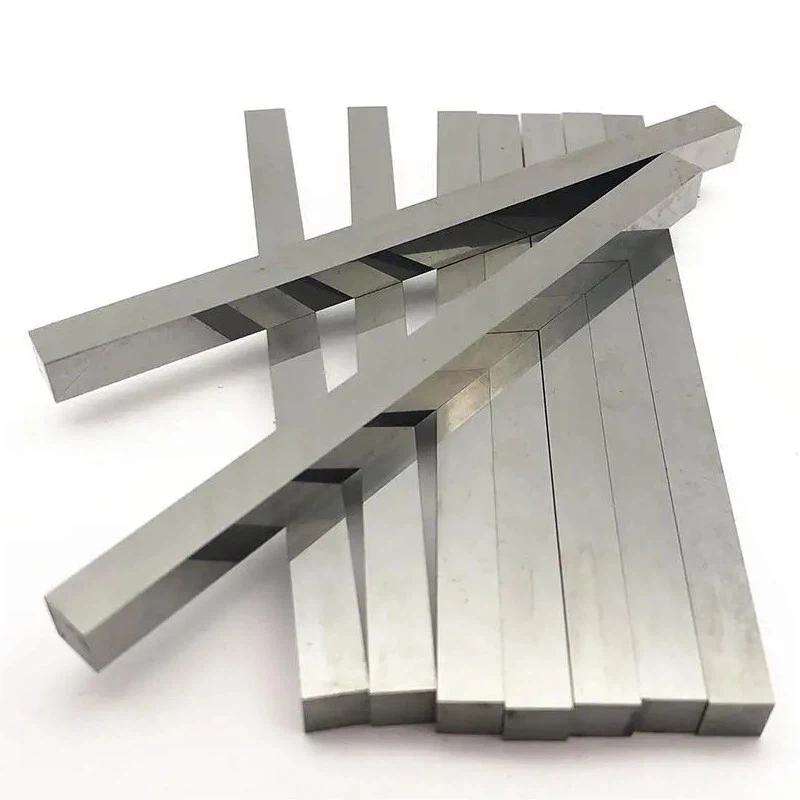

Tungsten Carbide Plate is another product where machinability matters. These plates are used in a variety of industries, such as mining and construction. They need to be machined to fit specific applications, and the ability to machine them efficiently can make a big difference in the overall production process.
Carbide Hammer Tips For Hammer Crusher also rely on the machinability of tungsten carbide strip. The tips need to be machined to the right shape and size to ensure proper function in the hammer crusher. A good machinability allows for the production of high - quality tips that can withstand the harsh conditions in the crusher.
As a supplier of tungsten carbide strip, I understand the importance of providing a product that is both high - quality and machinable. We work hard to control the microstructure and properties of our tungsten carbide strips to ensure that they are suitable for a wide range of machining processes. We also offer technical support to our customers to help them with the machining of our products.
If you're in the market for tungsten carbide strip and have questions about its machinability or need a high - quality product, don't hesitate to reach out. I'm here to help you with your procurement needs and can provide you with all the information you need to make the right decision. Whether you're a small - scale manufacturer or a large industrial company, we can work together to find the best solution for your application.
References:
- "Materials Science and Engineering: An Introduction" by William D. Callister Jr. and David G. Rethwisch
- "Machining of Advanced Materials" by Rajiv Singh and Iqbal Singh